Author: adm785g72

  • Where Is My Passion? Breaking Free From a Weak and Tired Life?

    Where Is My Passion? Breaking Free From a Weak and Tired Life?

    Where Is the Power? Breaking Free from the “Weak and Tired” Life

    “Be fearless in the pursuit of whatever sets your soul afire.” — Jennifer Lee

    Like most great stories, this one started in a smoky bowling alley on a Saturday night.

    I was at a place called Rockin’ Bowl with a group of friends, nightclub music blasting, trying to show off by using brute strength to power my ball down the lane. Pins were flying and it was incredibly noisy, but strikes were rare.

    Meanwhile, a group of teenage boys in the next lane were effortlessly bowling strike after strike. They weren’t using muscle; they were rolling the ball with a beautiful spin and curve. Being competitive, I tried to mimic their spin, almost fell flat on my face, and severely injured my wrist.

    In the grand scheme of eternity, bowling a curve means absolutely nothing. But that moment sparked a relentless curiosity in me. It drove me to look past the surface and ask the questions that really matter—questions about passion and purpose.

    Are You Weak and Tired? Welcome to the “WATs” Club?

    As a physician, I have seen thousands of patients over the years. Do you know what the single most common complaint I hear is?

    “Doc, I just don’t have any energy at all. I feel weak and tired all the time.”

    I call these individuals the WATs—the Weak and Tired.

    Look around you. Convenience store counters are lined with energy drinks, espresso shots, and caffeinated pick-me-ups. Yet, as a society, we are collectively exhausted. Why? Is it just stress?

    Think about a pioneer family living on the Great Plains in the mid-1800s. They went to sleep in a small wooden shack wondering if they would be attacked by wild animals, bandits, or hostile forces, all while scraping by for food. They had monumental survival stress, yet we are the ones walking around completely drained.

    The truth is, we rarely feel weak and tired when we’re on vacation. Our exhaustion isn’t always physical; it’s a symptom of a repetitive, mundane, and unstimulating daily routine.

    Physics vs. Spiritual Power

    In physics, energy is defined as the amount of work performed by force, and power is the rate at which that work is performed. The dictionary defines energy as the strength and vitality required for sustained activity.

    While our physical powerhouse is the liver, our spiritual energy powerplant is passion. Authentic passion yields both physical and spiritual energy. Without it, we are fundamentally drifting.

    Think about these three life scenarios:

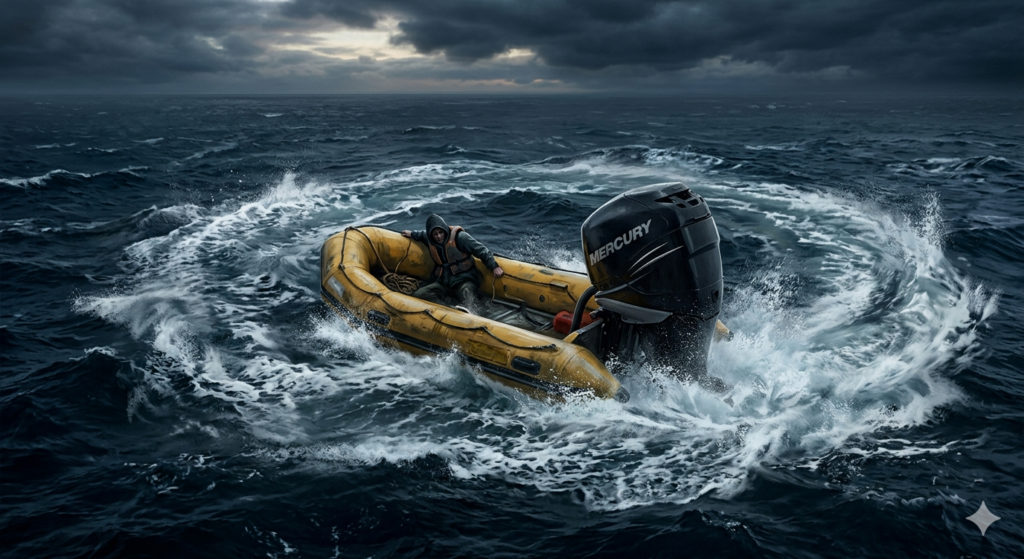
    The Drifting Raft: Imagine being stranded on a rubber raft in the middle of the Pacific Ocean. You have a compass and you know which direction to go, but you have no sail or motor. You paddle a little bit, lose your drive, and give up. You become a “dabbler”—and if you only dabble in a survival raft, you die. Without taking passion seriously, we dabble through life.

    The Unguided Motor: Now, what if you have a massive motor with endless power, but absolutely no compass or rudder? You will move incredibly fast, but you’ll end up navigating in circles—wasting time, energy, and money until you collapse from frustration.

    The Truck in the Mud: Picture a four-wheel-drive truck with a big engine. You floor the gas pedal, but you’re stuck in deep mud. Your tires spin, you make a ton of noise, but you’re just sinking deeper.

    The lesson? Energy and passion are completely useless without purpose. We need the power, but we also desperately need the guidance to steer.

    Escaping the Difficult Workplace

    A national survey revealed a sobering statistic: only 14 percent of U.S. workers believe they have the perfect job, and over half want a total career change. That represents roughly 75 million people who are completely unsatisfied with their work lives.

    When people sarcastically say, “Just livin’ the dream,” or “Living my best life,” the data shows they are usually trapped in drudgery.

    I know this firsthand. When I landed my first job as a newly trained physician, the work environment was immensely trying and difficult. The workplace culture from top to bottom was defined by pure indifference and apathy. I was so miserable that I spent my free time reading books on early retirement and investing just to find an escape hatch. On my nights off, the frustration was so intense that I would drive past that hospital and literally yell out the window at the building just to vent the built-up tension.

    Luckily, I eventually found part-time work at a different hospital facility. The employees genuinely cared, and the patients were polite and appreciative. It was the exact same medical profession, but a completely different environment.

    If you are profoundly unhappy in your job, remember that you cannot thrive where the culture clashes with your personality and passion. Sometimes, a simple shift in environment within your chosen field can change your entire outlook.

    Passion That Inspires

    In his groundbreaking book Start with Why, author Simon Sinek explains that at the very beginning, great ideas are entirely fueled by passion—that compelling emotion that causes us to do seemingly irrational things and make massive sacrifices.

    True leaders—think of figures like Steve Jobs, Martin Luther King Jr., or Elon Musk—possess a rare ability: they inspire others to act. They give people a sense of purpose and belonging that has little to do with external incentives or selfish benefits.

    When Bill Gates started out around 1980, he wasn’t driven by a desire to be the richest man on earth. He was fueled by an outlandish, bold vision: “A computer on every desk and in every home.” He passionately believed a personal computer could help every human reach their full potential.

    Your Inspiration Audit

    Are you inspired right now? Do you yearn to be? Take a moment to look at this checklist of attributes found in truly passionate, inspired lives:

    Passion: Do you have ideas that actively set your soul on fire?

    Compelling Emotion: Are your daily pursuits driven by deep, meaningful emotion?

    Intoxicating and Exciting Energy: Is there anything you’re engaging in that gets you amped up?

    Inspiration to Act: What drives you to get up early, skip the alarm, and relentlessly learn?

    A Sense of Purpose: Can you look at your daily tasks and know they serve a targeted guide?

    A Sense of Belonging: Do you feel connected to the mission you are working on?

    Lack of External Incentive: Are you pursuing a dream purely for its own sake, rather than a superficial payout?

    Acting for the Good of the Whole: Is your vision focused on lifting up and supporting others besides yourself?

    If you’re tired of spinning your tires in the deep mud of survival and distraction, it’s time to claim your God-given authentic self. It’s time to find the power.


  • The Pain Paradox

    The Pain Paradox

                                      The Pain Paradox

    “The soul is like a violin string. It makes music only when it is stretched.”
    – Neal Maxwell

    The following is an excerpt from my newest book set to be published in the next 2 to 3 weeks.

    Summer 1992

    What struck me first was the color of her eyes as she looked up at me when the paramedics wheeled the stretcher into the trauma room. Her eyes were a piercing shade of ice blue. The paramedics rattled off the details of the motor vehicle accident as if she weren’t even there:

    “19-year-old female, rollover MVA, ejected from the vehicle, traumatic amputation of right leg.”

    I immediately thought to myself, Whoa, whoa, whoa. Wait a minute, hold on; I don’t see a lot of blood on the sheet.

    At that exact moment, another paramedic rushed in with a big red plastic bag over his shoulder. He dumped it on a counter with a loud thud and announced, “I brought this in so you can reattach it.” It was her leg. She had sustained a traumatic amputation just above the knee. All the major arteries were in spasm, which was why the blood loss was minimal.

    The trauma team began the assessment: Airway… Breathing… Circulation… No head trauma; lungs sounded okay. We started taking X-rays of her chest and pelvis when I noticed something. Dark, merlot-colored blood was pooling from what appeared to be an open fracture around her pelvis.

    The statistics started to dance in my head. Crap. Open pelvic fracture and a traumatic amputation of a leg. Not good. She grabbed my arm and whispered softly, squeezing my hand, “Please don’t let me die. I don’t want to die. Please, please don’t let me die!”

    At about the same time, one of the ER nurses called out, “I can’t get a pressure on the machine; I’m getting a pressure of 70 palpable, but it’s dropping!”

    As I conducted a head-to-toe assessment, a cold, clinical fact hit me: In this type of injury, most studies indicate that mortality rates are some of the highest of any trauma insult. Insult? I thought, She’s dying! Statistics can give us a sense of support, comfort, and safety, but in this case, they only highlighted the futility and hopelessness of the situation.

    But there is always the possibility of a miracle. I have witnessed a few.

    The trauma team was assembled, and ortho had just arrived. We knew that her best chance was to stabilize the pelvic fracture as quickly as possible, as hemorrhaging around pelvic fractures is lethal without rapid control.

    We started preparing her for the OR. Two IV lines? Check. Fluids wide open? Check. I instructed the lab techs, who were finishing up her blood draw, “Send blood for type and cross, and tell the blood bank to have O-negative ready for her when she hits the OR.”

    As they wheeled her out, she looked at me with a kind of fear and despair that is still etched in my mind, even thirty years later. All I could manage to say was, “We are doing everything we can. Don’t be afraid; you aren’t going to die.”

    She coded about twenty minutes into the procedure and didn’t survive the resuscitation efforts.


    Excerpt from “The Pain Paradox: Embracing Suffering for Growth and Purpose” (Forthcoming, 2026)
    In a world drowning in misinformation, pain stands as the ultimate truth—unyielding, honest, and inescapable. It reveals our deepest realities, demanding we face them head-on. But what if pain isn’t just an enemy to endure, but a catalyst for profound transformation?
    This book dives into that radical idea, drawing from two years of research in psychology, philosophy, and spirituality to uncover how suffering builds resilience, empathy, and a deeper sense of purpose.Consider this: Over 60 million Americans battle chronic physical pain daily, while half the population grapples with anxiety or depression.
    As an ER physician with 30+ years in the trenches, I’ve witnessed heartbreak that seems to melt into one endless blur—except for cases like the 19-year-old with piercing ice-blue eyes. Despite our frantic efforts, she didn’t make it. Why such suffering? Why a young life cut short?
    These questions haunt us all, yet they point to a greater mystery: Pain’s normalcy and necessity.Enter the Pain Paradox.
    Our strongest instinct is to avoid pain, yet it’s through hardship that we gain life’s richest insights—far more than comfort ever offers. As Carl Jung noted, “One finds one’s destiny on the path one takes to avoid it.” Rooted in Christian principles but accessible to all, this exploration shows how pain refines us, from spiritual “stops” like brokenness and surrender (per Barna Group research) to forging authentic selves as God’s heirs.
    In four parts, we’ll dissect pain avoidance, self-inflicted misery, purpose amid storms, and how suffering births faith, hope, and love. Viktor Frankl reminds us: “He who has a why to live for can bear almost any how.” If you’re seeking clarity, meaning, or fulfillment amid trials, discover why everything of true value lies on the other side of hard—and how embracing the paradox unlocks joy beyond imagination.
    What hidden music might your stretched soul play?


  • Why Is There So Much Anxiety and Why Is it Increasing ?

    Why Is There So Much Anxiety and Why Is it Increasing ?

    If there is anything that we can be sure of it’s that anxiety is increasing and so are depression and suicide.  What is going on? Why is this happening?

    Some may argue, “well we have just had a global pandemic with millions of people dying. We shouldn’t be surprised by increasing levels of anxiety at all.”  That is a good point, but if we look at the stats and the research, we can be confident that anxiety levels, depression and suicide had been increasing before the pandemic.

    If we look at surveys from a few years ago, anxiety was increasing BEFORE the impact of Covid-19[1]:

    “’New survey results show Americans’ anxiety levels experienced a sharp increase in the past year, with almost 40% of respondents saying they felt more anxious than they did a year ago.’

    That’s a pretty big spike–following on the heels of a 36% jump between 2016 and 2017–and it means this year’s national, averaged “anxiety score” has tipped over halfway on a 100-point scale: it’s now sitting at 51, with a five-point increase since 2017.

    ‘This poll shows US adults are increasingly anxious particularly about health, safety, and finances,’ says American Psychiatry Association president Anita Everett, whose organization sponsored the survey.

    That increased stress and anxiety can significantly impact many aspects of people’s lives, including their mental health, and it can affect families.”[2]

    [1] https://sciencealert.com/americans are in the midst of an anxiety epidemic stress increase

    [2] www.sciencealert.com/americans are in the midst of an anxiety epidemic stress

    So we know that fear, anxiety and depression have all been increasing. What has been so disturbing is the increasing rates of suicide in young people.  There have been many theories trying to explain these increases and social media and cell phone use has been targeted as one of the most likely causes of this growing trend.

    Why are we so anxious ?  Why do we have no peace ?

    I think we can break it down into  three very important categories,  our thoughts, our emotions, and our actions.

    The more relaxed you are, the better you are at everything: the better you are with your loved ones, the better you are with your enemies, the better you are with your job, the better you are with yourself. 

    Bill Murray

     Our Way of Thinking

    Here is an excerpt from my latest book, Challenge Your Fear, Empower Your Spirit :

    So, let’s address one major source of fear and anxiety—our own thoughts. This idea is absolutely crucial to understand and accept because it’s the truth. Everything begins in your mind. Your thoughts are the beginning of every action. It could be a good thought or a bad thought. When it comes to fear and anxiety, most of our thoughts are just not valid or useful. We are focused on events or outcomes that could happen—not those that are going to happen.

    Not only that, but we could also be allowing these negative thoughts and ideas to control us. Making matters worse, we do nothing about it. We could be passively allowing our own thoughts and our negative emotions to control our actions and our behavior. You have a role to play in controlling your thoughts. You can also take an active role in controlling your emotions, including fear, but it requires some work and discipline.

    When you live in a world that allows your thoughts and your emotions to control you, there is a word for that—hell.

    If we don’t address our own thoughts and try to get control over them, then we are giving up a huge chunk of territory in this war. And this is a war, make no mistake about it. When it comes to our individual battles and taking on fear, if we have no plan, we’ve already lost. We need a battle plan. But before we can formulate one, we have to recognize what is happening when it comes to both fear and complacency. They are linked.

    Control Your Thoughts, Control Your Anxiety

    The idea of having no plan and coupling this with the notion that we are normally overwhelmed with negative thoughts is important when we think about having peace and feeling confident and competent.

    Our Emotions

    When we allow our emotions to call the shots, this is when we get into trouble. When we let the emotion of fear to control our lives this can lead to anxiety and depression. It also leads to complacency and feeling unfulfilled.

    Let’s look at how all of this happens in our minds so that we can understand our own behavior.  Here is an excerpt from my upcoming book,  The Pain Paradox.

    Feel, Think, Do

    When it comes to the brain and how we respond to certain stimuli, our primitive brains experience an event or emotion in a positive or negative light.  In other words, we perceive it as a good or bad experience.  So we feel first. Then we think.

    That is the progression.

    In humans, as in other animals, the two kinds of emotion—positive and negative—have specific locations in the brain. Positive emotions are associated with the ‘centers of reward’ and negative emotions with the ‘centers of punishment’. Many of these sites were subsequently linked through a common neural pathway in the evolutionarily ancient, sub-cortical limbic system, the medial fore-brain bundle, as it courses through the lateral hypothalamus to the ventral tegmentum and nucleus accumbens. Other brain reward ‘spots’, in particular those comprised of the cortical regions and sub-cortical nuclei, might eventually converge at this limbic core site. The brain ‘punishment’ centers might have evolved from a primitive brain system responsible for body health, in particular physical damage.

    Experiencing pain and pleasure in humans not only involves these evolutionarily older parts of the brain, common to all vertebrates, but also is inextricably linked with the latest evolutionary innovation—the neocortex—that is, the part of the brain that is responsible for self-consciousness. The brain is “the organ by which we experience the world—that is, we feel pain and pleasure, we yearn, and in order to find out how to minimize pain and maximize pleasure, we think. The first step in generation of emotions in humans is represented by unconscious, implicit evaluation of a stimulus, followed by physiological responses, and the second step is a conscious experience that may or may not persist….”

    The biology of happiness: Chasing pleasure and human destiny Ladislav Kováč1

    EMBO Rep. 2012 Apr; 13(4): 297–302.  Published online 2012 Mar 13. doi:  10.1038/embor.2012.26

    So first we feel the experience and then the signals are transferred to our neo cortex and then we think.   So how we think about our pain or a difficult or uncomfortable situation influences our actions.  What we do.   Our primitive brain feels, our neo-cortex thinks and then we do.

    So essentially our neo-cortex and how we think about the pain or the pleasure is the biggest influencer of our behavior and our habits.

    Our experiences, our habits and our conditioned responses to events in our lives comprise who we are and how we behave. But we can’t really learn anything about ourselves until we look at our behavior.

    You can only find out what you actually believe (rather than what you think you believe) by watching how you act. You simply don’t know what you believe, before that. You are too complex to understand yourself.”        –  Jordan Peterson

    If we examine our own behavior in certain situations we have a pretty good idea if we are generally bent toward a negative predisposition.  We also have a pretty good idea if we are always looking on the bright side of a particular event or situation.

    By the same token, we know if we are willing to take chances or try new things.

    Our Actions (what we do)

    I believe that this is one key to dealing with anxiety, fear and depression. This idea came about by observing the behavior and the attitude of my son who is in the middle of his third year in college. He was experiencing extreme anxiety and pressure because he was trying to look into many different areas of business to try to figure out what he was going to do once he graduated.  When he figured out exactly what he wanted to do, his anxiety levels and the stress and pressure he was experiencing were significantly reduced. He experienced peace.

    Who is the least afraid or the least anxious in a high stress situations?  The one who knows exactly what to do and how to do it. I have experienced this first hand working as an emergency room physician for over thirty years.

    There is one thing that I have noticed and have written about in my books that I believe causes a lot of anxiety, stress, despair and hopelessness. It is a big conundrum and it is the problem of  AIMLESSNESS. 

    It is what I call the zombie walk. Just moving forward arms outstretched reaching for the next thing to come into your path.

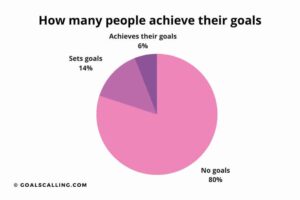
    We know from statistics that the majority of Americans do not have a particular goal that they are striving for. Also the stats tell us that even if they do have a goal, it isn’t written down, or there is no plan as to how this goal will be reached or implemented.   This is  AIMLESSNESS and it is rampant in our population.

    Two numbers immediately jump out when looking at this graph.  One, only 20 percent of people actually bother to set goals. Number two, only 6 percent of people who set goals actually reach them.  That means that only 6 percent of the population derive the benefits of “goal management.”

    Many people will look at a number or graph like this and think, “set some goals,  big deal, I’ve heard that many times.”

    In reality, setting goals is not the point of all this.   When we think about this from a Christian and faith point of view, setting a goal and pursuing a God given purpose is already a given.  It comes with the territory.  It’s like when you buy a new car, you assume that it comes with air conditioning.

    Well, we as humans have built in goals that were designed and created for us that are encoded in our DNA. Many people will not believe this idea, but it is true.  We were created with different talents and gifts and we are to use those gifts in the service of others. Of course, we are free to ignore those gifts and goals, but I would argue that if we do that, we are the ones who lose.

    One very important concept that I have discussed in my books is that the important part of this whole idea is not goal setting.  That is already taken for granted. It is goal-management that is the key here. This is where the real and true benefit comes from.

    Here is an excerpt from my second book Discover Your Passion, Empower Your Spirit

    When we are closer to discovering our passion and we can see the characteristics of that passion in our lives, we can use goal management as a tool to help us on our way. Here are some of the benefits of goal management (after we have discovered our passion):

    1. Provides direction—remember the rubber dinghy and rowing in circles?
    2. Clarity of focus—clarity of focus helps to maintain that direction.
    3. Sense of control or power—remember that if there is no sense of control, you feel powerless at work and powerless in life. When you set a goal, you are in control. You decide how you are going to go about reaching that goal, including the plan for implementation.
    4. Gives energy and motivation—you know exactly where you are headed, so you are motivated.
    5. Gives you a sense of purpose—you know you aren’t wasting time. You feel confident and assured.
    6. Brings a sense of satisfaction and fulfillment when you achieve a goal. Your self-confidence soars because you focused on the goal and you reached that goal. You feel confident and powerful, able to reach just about anything you truly want to achieve.

    So if we go back to the stats, we can see that only about 6 percent of the population experience this energy, motivation, sense of purpose and feelings of satisfaction and fulfillment.  It isn’t hard to envision that 94 percent of the population could be susceptible to feelings of anxiety and depression.

    By the way, having a purpose is important for our own particular sense of well being. It is integral to the actualization of our own particular gifts, talents and potential.

    Here is an excerpt from my upcoming book The Pain Paradox

    Purpose and meaning are not only critical as a basis for our identity, but when it comes to endurance and resilience, they provide the impetus and drive that help us to overcome difficult circumstances that will inevitably come up.

    For example, theoretical research identifies purpose as a developmental asset (Benson, 2006) and an important component of human flourishing (Seligman, 2002). Empirical research finds that it is associated with greater levels of happiness (French & Joseph, 1999) and resiliency (Benard, 1991).

    According to Seligman (2002) there are three primary paths to happiness. The first route involves experiencing as many of life’s pleasures as possible and results in short-term happiness. ( I wasted 20 years on this one.) 

    The other two routes produce longer lasting, deeper forms of contentment.

    The second, also called the good life, involves becoming deeply involved in those activities in which one excels and losing oneself in the process, ( this is one descriptor of passion as outlined in my book, Discover Your Passion, Empower Your Spirit, this is known as  “flow”.)

     The third, the meaningful life, involves pursuing a path in which a cause or an institution supplies a sense of commitment to something greater than oneself.   This is purpose that has punch and imbues us with a sense of “why?” 

                                 “He who has a why to live for can bear almost any how.” ― Friedrich Nietzsche

    So what happens when you are aimless and drifting?  Well, it’s just like a ship that’s in the middle of the ocean in a big storm that has lost power. It is at the mercy of the waves coming at it.  If it gets hit broadside, it is more at risk of being overwhelmed and capsizing.

    When we are undecided and we are aimless and drifting we are way more likely to be anxious and depressed.  We are at the mercy of all the waves that come with just existing. It is a tough world out there and everything that we are engaged in is difficult.

    Our jobs are difficult, marriage is difficult, being a student and getting a degree is hard, starting or running a business is hard, raising children is hard, dealing with health problems is hard, working and saving for retirement so that we can be financially secure in our old age is hard. Nothing in this life is easy. We can all agree.

    Why make it harder by drifting and aimlessness?    What do we do ?   How do we figure out purpose ?  How do we use passion to formulate goals ?

    I would start with passion.

    The Elements of Passion- Excitement


    Once you have a better idea about passion,  I would pursue purpose and authenticity.

    Why Study Near Death Experiences? They Shine Light on Purpose and Meaning


    It is my belief that people are anxious, depressed and unfulfilled because they are not living out their lives in the power of their authentic self.  The self that God had in mind when he created us.

    My definition of the the authentic self is:     who we were meant to be, doing what we were meant to do, using the gifts we were meant to use, with the love we were meant to share. 

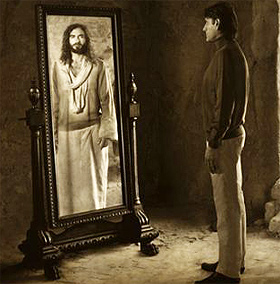
    From my own personal observation and experience, it seems clearly evident that people are anxious and unfulfilled because they are living out a false or human interpretation of who they are and are pursuing goals and desires that have been foisted upon them by society, culture or other people.    True freedom comes with authenticity.  True power and vision are derived from a personal relationship with Jesus which allows for an authentic expression of who we were created to be.

    Discover Your Passion.   Find Your Purpose. Be who you were meant to be.

    The relief and gratitude that you will experience will last for eternity.

    YBIC

    Johnny Cavazos


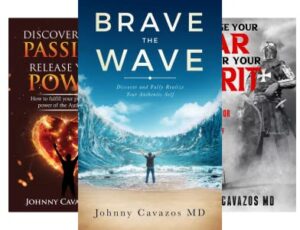
    Authentic Self Series (3 book series) Paperback Edition (amazon.com)


  • Why Study Near Death Experiences? They Shine Light on Purpose and Meaning

    Why Study Near Death Experiences? They Shine Light on Purpose and Meaning

    The meaning of life is to find your gift, the purpose of life is to give it away.

    Pable Picasso

    I’ve been hearing a lot about purpose lately in interviews on television or documentaries and in conversations with other people. These are just a few actual quotes that I remember off the top of my head,  “Our divorce was difficult and I hope he is happy, but I really think his main problem is that he needs to find his purpose.”   “I just want to know, what is my purpose.?”  ” I was having a lot of trouble, but the best advice I got was, “Do everything with purpose.”   There are many more, but you get the picture.

    Do you have a real good idea of what your purpose is?  Do you believe you were created for a purpose? Do you find meaning in what you are spending your time on?  Why is this so important?

    The one thing that we can all agree on is that life is hard. Everything is hard.  Work, marriage, providing for ourselves and our families, raising children, getting an education, starting a business, preparing to retire, maintaing your health, getting enough exercise, eating right.  Choosing to do what is right is hard.  Standing up for truth in a world dominated by relativism and post modernism is hard.

    There is nothing easy in this world.  I take that back. There are some things that are easy.

    Sin is easy.   Criticizing others is easy.  Complaining about our situation is easy. (I am trying to stop the whining and complaining about my own situation. Guess what?  It ain’t easy) Being selfish is easy.

    If we focus on the things we value, like our families, and trying to survive in a crazy, broken fallen world, it is pretty hard to just get by. Whatever we choose to do or choose to pursue, there will be pain and there will be suffering. But if we stop to think about it, if suffering and pain are inevitable, is it possible to endure with wisdom and intelligence?  Can we avoid pain and suffering that is ignorant and meaningless?  You can bet your life on it.

    Why Study Near Death Experiences?: Because Everyone is Betting On Something

    When we live our lives without purpose or meaning, we suffer stupidly.   There is nothing worse than suffering or enduring pain that we created and that has no intrinsic or inherent value. Many of us are enduring pain and suffering that is self created.   I just spoke to a friend who has a family member on their death bed from alcoholic liver failure.  This person hid their daily drinking for years and probably has a couple of weeks left to live.

    Author and psychologist Jordan Peterson sheds some light on this idea,

    “If you have no meaning you are anxious and overwhelmed, we know this from a neuropsychological viewpoint, because purpose gives you a game to play and rules to follow. Purpose gives you something to aim at and positive emotion. Without purpose you are left with inalienable suffering . . . All the meaning in your life is going to come about because of the idea of accepting responsibility. You need the sustaining meaning because otherwise you suffer stupidly and you get bitter, you get resentful and you get cruel and then you get homicidal and then genocidal. That is the whole pathway.”[1]

    Notice the idea of accepting responsibility. It’s the “it’s on me” attitude. That is the attitude that we incorporate into our very being in order to come up with an effective plan to find purpose and meaning and to develop confidence and competence. Why?  Because it’s the opposite of avoidance. It’s acceptance. Its curiosity. It’s running or moving toward the the thing we are avoiding. It’s on you, and it’s on me.

    [1]  www.youtube.com/watch/v=1opHWsHr798&t=6389s

    The one thing about accepting responsibility, is that it is the opposite of victimhood.  Accepting responsibility is the first step in identifying meaning and purpose.

    So how and where do Near Death Experiences come into play ?  Good question.

    Accepting Our Assignments

    When I start a book project or start researching a topic, inevitably, there are going to be lessons that I learn that I never knew or understood.  I try to include these ideas to help others because some of these principles have helped me to become a better husband, father, co-worker or boss. They have also helped me with pursuing my purpose.

    The one idea or consistent description of NDEs that had an impact on me was the impression or the question that is asked when an NDEr is standing in front of a “being of light” or God or Jesus.

    There is an amazing amount of agreement as to what NDErs are asked.   If you spend time studying NDEs, this is a powerful and consistent recurring theme.  Essentially we will be asked about how we used our gifts and talents in serving others and in making a contribution to the betterment of the world.  We each have an assignment, or a mission per se.  Our job is to figure out what our particular gifts are, and how we can use them to better the world.

    The kicker is that fulfilling our purpose leads to our greatest joy and the worlds greatest joy. It is doing exactly what we were created to do.

    In this excerpt, one NDEr is describing how she was told that we all have assignments given to us at birth.  This ties into our purpose for living,

    One thing I (learned) was that we are ALL here to do an “assignment of love.” We don’t have to do it at all, or we can do as many as we like. It’s up to us. Our “assignment” is programmed in at birth, and it is the very thing or things we love most.

    Several things to point out here.  Notice that no one is exempt. We are ALL here to do “an assignment of love.”   Notice also that free will is involved. We are free to choose to accept or reject our assignment. It’s up to us.

    Also our “assignment” is programmed in at birth and it is the very thing we love most.   This is an important clue.  But I have to stop for a second to bring in the Word. We already know that God created us for good works. The NDE just reinforces that concept.  As I have argued before, the NDE functions as a source of spiritual guidance, but it acts as support or an adjunct to what the bible teaches. The bible is primary when it comes to Truth and authority in our lives.

    For we are God’s handiwork, created in Christ Jesus to do good works, which God prepared in advance for us to do.

                                                                                                                    ( Ephesians 2:10 NLT)

    We have a choice in this matter. We have freewill and we can choose to believe in and commit to Jesus. We can spend time with Him and accept his sacrifice on the cross becoming a brother or sister in Christ.   We become heirs in the family of believers.

    If we take the idea that we are to love God/Jesus as the most important thing we can do with our time, that love is an act of the will.  Love is a choice.  We can choose to love and obey Jesus and accept responsibility for our “assignments”  or we are free to reject the purpose for which we have been created. It doesn’t get more complicated than that.

    What we may not realize is that when we accept our purpose, it creates meaning in our lives. It also increases love, joy, power and confidence within us. Why?   Because we know we aren’t wasting our time or our lives. It also allows for greater endurance and resilience  when we encounter the inevitable pain and suffering that come about living in a fallen, broken world.  Purpose protects us from wandering off into activities and pursuits with little value.  Purpose also provides power and energy.

    This particular person who told us about our assignments goes on about her NDE:

    I was such a bozo. I always thought doing what you loved most was selfish. I can remember how amazed and happy I was when this information “came into my mind.”  This other source of energy, using my voice said, “That is the most unselfish and constructive thing you can do for the world because that is your assigned energy and you will be happiest doing it, you will be the best at it, and most respected for it!

    ([1] Kenneth Ring and Evelyn Elsaesser Valarino, Lessons from the Light (Needham, MA: Moment Point, 2006), 47.)        ( Lessons from the Light by Kenneth Ring is an excellent book on Near Death Experiences)

    One important and critical point to realize when it comes to purpose or our “assignment of love and energy” is that these are “ONLY I” activities.  They are also “can’t not” activities.

    Your purpose was designed to be fulfilled by you alone in the power of your authentic self using the gifts,talents and blessings so gracefully bestowed on you by God.  ONLY YOU can fulfill YOUR PURPOSE.

        WORKS? FAITH?  SALVATION?     

    One thing that really caught my attention recently was an equation that I saw in a lecture by a Christian apologist. It was an eye opener because it really puts our faith and our salvation in context.

    Salvation + Faith = Works
    Faith + Works = Salvation

    There is a lot of controvery among the different Christian denominations about what role each of these plays in salvation and I just get confused when I listen to debates about how these are related and the role they play. We can disagree on how faith and works are necessary for salvation or whether you can be saved by faith alone, but I realized something just by looking at both of these equations.

    If you look at both of these equations  if you take works or deeds out of each of them, they don’t make sense.  Works are a part of both.

    Deeds.  Bearing fruit. Hand to the plow. Taking action.  Whatever you believe, works or deeds play a role.  Love is invisible until we see action. Loving God is our most important assignment.

    Then He said to another man, “Follow Me.” The man replied, “Lord, first let me go and bury my father.”But Jesus told him, “Let the dead bury their own dead. You, however, go and proclaim the kingdom of God.” Still another said, “I will follow You, Lord; but first let me bid farewell to my family.”Then Jesus declared, “No one who puts his hand to the plow and then looks back is fit for the kingdom of God.”

                                                                                                              ( Luke 9:59-62 NLT)

    “We are healed to help others. We are blessed to be a blessing. We are saved to serve, not to sit around and wait for heaven.

    Rick Warren

    To sum up what Jesus is telling us and what Rick Warren is saying and what these equations are telling us is that we are saved by faith for something. For what? For good works. We have assignments. NDEs tell us the same thing. God has a plan. It is a privilege and an honor to tell others about Jesus and how he offers a deal that no one can match.

    When we accept Jesus as our personal savior,

    1. Our sins are forgiven (huge)
    2. We have a purpose for living
    3. We have a home waiting for us in heaven

     “Do not let your hearts be troubled. You believe in God; believe in Me as well.  In My Father’s house are many rooms. If it were not so, would I have told you that I am going there to prepare a place for you? And if I go and prepare a place for you, I will come back and welcome you into My presence, so that you also may be where I am.  You know the way to the place where I am going.”

     “Lord,” said Thomas, “we do not know where You are going, so how can we know the way?”

    Jesus answered, “I am the way and the truth and the life. No one comes to the Father except through Me.  If you had known Me, you would know My Father as well. From now on you do know Him and have seen Him.”

                                                                                                              ( John 14:1-7 NLT)

    Based on the Barna research data, in the blog post below, we know that the majority of believers ignore the second part of the deal that Jesus offers, Our Purpose.

    1 % Of The Population Experiences “Profound” Love

    This is bearing fruit. Taking action. Hand to the plow.  We want forgiveness and we want heaven, but we ignore purpose and the pain and suffering that comes with it. Why?

    Because we don’t realize that purpose itself is a gift.  It is a gift of power and protection. It also is an honor and a huge privilege to serve Jesus and tell others about him because it fulfills one of our most important jobs as believers in this world.

    “Everyone who acknowledges me publicly here on earth, I will also acknowledge before my Father in heaven.

    (Matthew 10:32  NLT)

    Have you ever noticed actors or celebrities in awards ceremonies or players on a football field pointing up to the sky.  In interviews or when accepting an award,  some will say, “first of all, I want to thank my Lord and Savior, Jesus Christ”.  That is what they are doing. They are publicly, boldly and without fear, acknowledging that they belong to Jesus.  They don’t want to have to explain why they didn’t do so when they had such a huge audience.

    Many times they get ridiculed or criticized because they are acknowleding their faith before others.

      Purpose and Wisdom

    From my own experience when it comes to making choices and choosing to do what I think is right, I usually end up making a costly mistake. The most common question I ask myself is “what the heck where you thinking?”   It is usually followed by “are you an idiot or what?”

    We as humans in general are not very smart.  We have plenty of evidence for this just by looking at our own bad decisions and by looking at how much destruction, death and misery we have created for ourselves in the 20th century. There were over 100 million people murdered by communist regimes and world wars during that century.

    We are slowly destroying our planet and now we are afraid of speaking truth or quoting the Word because we don’t want to be cancelled or we don’t want to offend anyone.

    In my humble opinion we have access to wisdom and we can become wise when we think the way God thinks. When we align our will with His and conform our thoughts and behavior to that of Jesus, we become wise.

    There aren’t any other paths to true wisdom and knowledge.       

    We can accept our assignment and pursue our purpose, or we can ignore and reject it.  This is a choice and it is an act of the will.

    We are also free to reject everything that Jesus is offering and pursue our own vision, plan and the purpose that we created for our own lives.  Many people choose this path.

    If the path you are on following a purpose you created for yourself is becomming too difficult to pursue or if you are confused or anxious about the road you are on,  I highly recommend that you discover and pursue your Authentic, God-given purpose. Spend time with Jesus in the Word and seek Wisdom. Find your Authentic Self.

    My previous 3 books deal with the road to discovery of our Authentic Selves and address passion, fear and I am finishing the fourth book on pain and suffering. I feel the need to define our “Authentic Self”,

    Your “Authentic Self” is the person or self that God had in mind when he created you. It is becomming who you were meant to be, doing the assignments and tasks you were meant to do, using the skills, talents and energy you were designed to use, with the love you were meant to share. 

    Discovering and uncovering your “Authentic Self” won’t make your life any easier, but it will allow for greater joy, energy, confidence and competence. It will give you the greatest sense of  satisfaction and fulfillment because you know that you aren’t wasting your time or your life.

    The books below can help you on this quest.   Find your Authentic Self,

    You won’t regret it.

    Your Brother in Christ


    Johnny Cavazos MD


    If you are dealing with symptoms of Long Covid, here are a couple of blog posts.  I hope to have one coming out soon that has some ideas about helpful treatment. I’ve been dealing with it for 2 years.


    Long Haul Covid: A Medical Emergency?


    Long Haul Covid: A Problem With Many Faces


  • Why Study Near Death Experiences?: Because Everyone is Betting On Something

    Why Study Near Death Experiences?: Because Everyone is Betting On Something

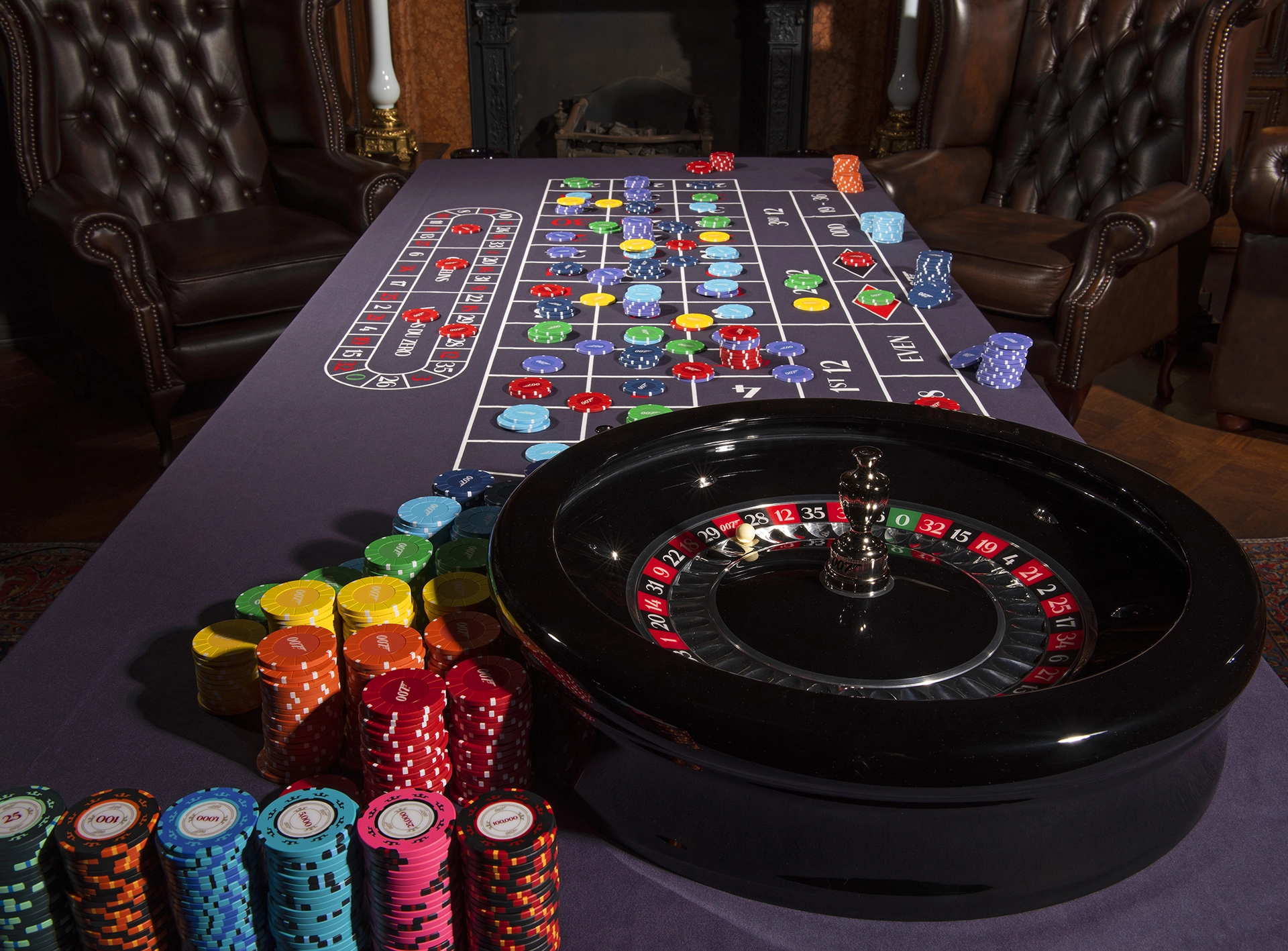
    I like playing Roulette.  It is a fun game for me. I don’t usually bet much money, because for me, gambling or betting is just about entertainment.  It’s a distraction.  Like going to a movie or reading a book or listening to a song. It’s just a way to spend free time. It isn’t an investment or a way to make a living. There are very few people who can make a living by sports gambling or by playing poker.  It’s just not a good retirement plan.

    The thing I came to realize as I was thinking about Covid and research into my next book on the topic of pain and suffering is that each and every one of us is making a bet right now.  We may not even realize it, but we really are. We can look at two of our most valuable possessions, time and money and we can get an idea that we are “betting”  both on whatever we are focused on. We just don’t spend too much time pondering the concept.

    If you don’t like the idea of betting, you can say you are “investing” time and money at this very moment into something you perceive to have value. It doesn’t matter who you are or how much time or money you are investing, you are still investing. We all spend time and money on what we deem to be valuable.

    You may be totally focused on getting an education, like a college student.   That is a really smart investment.  You could be focusing all your time and money on raising your family which is another good investment.   You could be working and saving for retirement, which is important because we may not be able to work to support ourselves in our 70s or 80s or 90s.  These are all good, solid goals that many of us share.   Wise people invest in their financial security, education, health or families.  All worthwhile and solid goals.

    Betting and Regretting

    Daniel Pink in his latest book came to the conclusion that as we get older, the most common things we regret are what he calls, foundational regrets.  From surveys and research studies, it was found that these are the most common regrets people have when they reach the age where we are too old to do something about them.  When it comes to valuable lessons for our young people, I would venture to say that this idea has utility and is practical.   Foundational regrets include,

    1. Financial regrets: (not saving enough or investing wisely enough for our later years)
    2. Educational regrets: (very few people say “I wish I would have gotten less education”.  As a matter of fact, its pretty much unheard of
    3. Health regrets: (not paying attention to good healthy habits like diet, exercise and avoiding bad habits like smoking or excessive drinking)

    (Daniel Pink, The Power of Regret: How looking backward moves us forward)

    What Daniel Pink is arguing is that if you have a good education, a sound financial plan and you take care of your health, you pretty much have a solid sturdy foundation to build a productive and meaningful life.

    From my own perspective, when it comes to faith, meaning, purpose and true authenticity, these come from the recognition of identity and responsibility.  These come about when we have a good grasp of who we are and what we were created to be and do. In addition, to fulfill purpose and find meaning, there is a requirement of accepting responsibility.  This is huge.

    But to get there, we’ve got to start with Truth.

    Investing in Truth

    When we are all betting our lives and spending our time and money on whatever we think is important. We are betting on “our truth”,  which is okay if it lines up the “THE TRUTH”.   But what is THE TRUTH ?

    Well, Jesus told us in His Word that he is THE TRUTH.     We can believe HIM or we can come up with another truth.

    How do we know that “our truth” is worth our time and money?

    I would have to argue that this kind of question is going to require something called DUE DILIGENCE.

    What does that mean ?  Here is the Merriam Webster definition,

    Due diligence has been used since at least the mid-fifteenth century in the literal sense “requisite effort.” Centuries later, the phrase developed a legal meaning, namely, “the care that a reasonable person takes to avoid harm to other persons or their property”; in this sense, it is synonymous with another legal term …

    This is a very interesting definition.  If you look first at the mid-fifteenth century definition, “requisite effort” gives us a simple,but clear idea what due diligence means.  It involves effort.  Effort that is required.

    Required for what?  I would argue the effort required to discover the Truth.  Truth has value.

    Now notice that the definition is expanded to say the “care” that a “reasonable” person takes to “avoid harm” to other persons or their property.   Maybe we can project that onto ourselves and say that we “take care” to avoid harm to ourselves or our family members.  We’re interested in that aren’t we ?

    As I have mentioned many times, the first place to find Truth is in God’s Word.  I would start in the Bible.

    Studying the Word, is never a waste of time.  We absolutely need guidance.

    Why Do We Need Guidance Every Day ? Because Our Judgement Sucks

    Near Death Experiences,  Spiritual Guidance ?

    When it comes to Due Diligence, we start with the Word. That is our best source for wisdom and guidance.  When it comes to Near Death Experiences, I believe they are sources for Spiritual Guidance that you can’t find anywhere else. 

    I also believe that Near Death Experiences are helpful because they point out ideas that are

    1. unique

    2.  practical or useful

    3.   helpful in allowing us to see behaviors or habits  that can be dangerous or harmful to ourselves or our families

    Why Study Near Death Experiences ? (What Happens When We Die)

    They serve as a powerful force for spiritual guidance and they help remind us about what is important in this life and what isn’t.

    In Kenneth Ring’s book,  Lessons From the Light,  he argues that people don’t need to have a near-death experience to gain the benefits of having one.  Look at this list below of the positive benefits that people gain after undergoing a near-death experience,

    Here is an excerpt from my book  Brave the Wave,

    True light is from Jesus and the truth that he speaks. He shows us values that are higher and above what the world values. The same values that the majority of NDErs talk about and tend to gravitate toward after their experiences. True light.

    After near-death experiences, many people have major life changes in the areas listed here:[i]

    • appreciation for life—increased sense of gratitude
    • self-acceptance—greater self-worth and self-acceptance
    • concern for others (the most striking and consistent change)
    • reverence for life—appreciation for the planet and nature
    • antimaterialism—acquisition of things seen as pointless and empty
    • anticompetitiveness—impressing others not important
    • spirituality—a more universal sense of the spiritual
    • greater quest and thirst for knowledge
    • sense of purpose—more meaning and sacred purpose in life  (purpose protects, guides, allows us to fulfill our potential)
    • the disappearance of any fear of death—such fear completely gone
    • certainty of life after death
    • belief in God—deep inner certitude that God exists

    [i] Ring, Lessons from the Light, 124-125.

    From my own experience and by studying these ideas, I can confidently say that a growing, thriving, relationship with Jesus gives us a deeper sense and appreciation for each and every one of the attributes listed above.

    Even if we have never had a near-death experience.  It is an example of “living above the world.”   Just like Jesus taught.

    Notice that the top three changes have to do with the very reason we are here.  We have a sense of gratitude and appreciation for what Jesus has done for us and we recognize our own value because of the magnitude of his sacrifice for us. We learn to love and value ourselves which allows us to love and value others.

    The closer we get to Jesus, the more power, peace and hope we have and the less our love for the world and the things of the world.  Jesus said,

    The world would love you as one of its own if you belonged to it, but you are no longer part of the world. I chose you to come out of the world, so it hates you. 

    John 15:19 NLT

    One of the most reliable indicators that you are coming up out of the world, is that you see less value in the things of the world and you can readily see the lies that the world engages in every day.  Remember that Satan is the father of lies and God allows him to roam the earth.

    When it comes to value, investing, regrets and betting, focusing on the above list, especially when it comes to loving God and loving others, brings a tremendous amount of value into your life that will impact others.  We know that this is tough, because only about 1 % of the population is getting there. That doesn’t mean we should stop trying.

    1 % Of The Population Experiences “Profound” Love

    Sharing the Good News

    I’m a physician and I can tell you that as an emergency room physician, I have saved people’s lives, but what kind of lasting impact does that have? Especially if the person has no faith in Jesus or is spending the majority of their time on worldly goals?

    Having an impact on someone’s eternity is way more valuable.  As believers, it is also what we are all called to do.

    Below is a powerful sermon by Pastor John Piper. He is my go to guy when it comes to bible commentary and exegesis.

    The title grabs your attention,  “Better to Lose Your Life than Waste it.”    We are all going about our lives doing our errands and trying to survive and take care of our responsibilities, we don’t want to lose our lives. Right?  But what John Piper is saying is that there is something worse than losing your life.  Wasting your life.

    The one thing that each of us wants to avoid at all costs is that we don’t ever want to waste our lives.

    But then he goes on to tell us the best way to add value and worth to our lives. It’s focus is on Acts 20:24

    However, I consider my life worth nothing to me, my only aim is to finish the race and complete the task the Lord Jesus has given me- the task of testifying to the good news of God’s grace.

    There is nothing more valuable that you can do with your time than this, share the truth and testify to the good news about the love, mercy and grace of God and Jesus for each and every one of us.

    If you spend time, money and effort on this one task, you know that you will never waste it.


    Your Brother in Christ

    Johnny Cavazos MD

    PS,

    If you are having persistent symptoms after suffering from a bout of Covid, you can learn more here,

    Long Haul Covid: A Problem With Many Faces

    or here

    Long Haul Covid: A Medical Emergency?

  • Long Haul Covid: A Medical Emergency?

    Long Haul Covid: A Medical Emergency?


    Why Bother ?

    Long Haul Covid is real. We know this with certainty.  https://bravethewave.org/2022/03/07/long-haul-covid-a-problem-with-many-faces/

    But why should we spend time looking into this if we believe we are possibly manifesting the symptoms of this post Covid conundrum?

    Well, I have two hypotheses that should make us more aware of what is going on and should motivate us to try to come up with treatment regimens or therapies for this unusual phenomenon.

    First of all, we aren’t surprised by all the confusion and all the different ideas that are being thrown around when it comes to Long Haul Covid.  I can tell you from experience that Covid-19 manifests in so many different ways in so many different people that it can be described as multifaceted and multisystem when it comes down to where and how it attacks our bodies.

    Some people think Long Haul Covid or Post Acute Covid syndome (PACS) is really just another manifestation of Mast Cell Activation Syndrome or MCAS.   The bodies immune system is triggered at the level of specific cells in our bodies that release histamine.

    Some people think long covid is just a problem with dysautonomia and people are having problems with Postural othostatic tachycardia syndrome or POTS.

    Some people think long Covid is merely a manifestation of a long known and studied entity known as myeloencephalitis or Chronic Fatigue Syndrome.

    Getting Older, Faster ?

    There is now data to show that Post Covid long haulers who have continued symptoms have something called hyperoxidative stress.

    Oxidative stress is an imbalance of free radicals and antioxidants in the body, which can lead to cell and tissue damage. Oxidative stress occurs naturally and plays a role in the aging process.

    https://www.medicalnewstoday.com/articles/324863

    Free radicals are the normal byproduct of energy production in the body. Some studies have shown that in Long Haulers, there is an overabundance of free radicals and a relative depletion of anti-oxidants such as glutathione in the body.  This can lead to the manifestations of chronic fatigue. Also, if there is an overabundance of free radicals that lead to cell and tissue damage, could this lead to an increased incidence of cancer ? At this point in time, we don’t know.

    So, in the first hypothesis, Long Covid could possibly lead to an acceleration of the aging process because we are well aware of a hyperoxidative state in Long Haul Covid. I have symptoms of Long Haul Covid, and I can tell you, I don’t feel younger.

    https://www.frontiersin.org/articles/10.3389/fimmu.2021.799558/full

    One of the most important results from this study is that people who had mild disease with regard to Covid had persistent hyperoxidative and hyperinflammatory responses.

    Importantly, the sustained cellular stress and inflammatory status found in the COVID-19 patients post-recovery was not associated with initial disease severity, since this inflammatory profile was observed regardless of patient classification at the acute phase of the disease as inpatients or outpatients. These findings suggest that COVID-19-related stress and inflammatory responses persist after short-term recovery even in patients displaying mild symptoms at the acute phase of disease.

    So just a little background on the idea of the hypothesis. A hypothesis is what scientists use to try to explain their observations about what is going on when it comes to a particular problem they want to solve or disease they want to treat.  But in this case we have growing evidence for a hyperinflammatory process, a hyperoxidative state, and a vascular inflammation problem, which may be the most concerning.

    There is some information about long haul covid or Post Acute Covid Syndrome (PACS) as the scientists are calling it, but in my personal opinion, very few are describing this phenomenon as a true medical emergency.

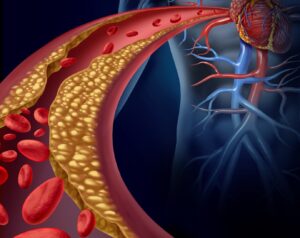
    Clogged artery and atherosclerosis disease medical concept with a three dimensional human artery with blood cells that is blocked by plaque buildup of cholesterol as a symbol of arteriosclerotic vascular diseases.


    Accelerated Heart Disease and Stroke ?

    I want to mention one thing here that is personal and one of the main motivators for me writing this blog post.   I don’t have a history of heart disease in my family.  My dad smoked for 40 years and had no sign of cardiac disease at all in his mid 70s. He died of emphysema.  My aunt lived to the age of ninety-two and smoked cigarettes every day starting at the age of 15.  If I got chest pain that seemed unusual, I never considered a heart attack as the cause.

    I have lost two friends due to Covid.  One was sick and went to the hospital and he was told to go home since his oxygen level was not low enough for admission, he died that night in his sleep. Another died of a massive heart attack. He too had no history of heart disease in his family and he habitually ran 10 miles a day.  One of my physician colleagues just had a heart scan that showed significant calcium deposits  (atherosclerosis) where there were none just 2 to 3 years ago. He has no history of heart disease in his family.

    I have been dealing with joint pain, body aches, mental fog, post exercise malaise and persistent shortness of breath all of which represent some of the most common symptoms associated with Long Haul Covid, so this is personal for me.   Also I feel compelled to share the information that I have learned from studying this disease entity.

    So this brings me to the second hypothesis. This one involves the possibility that a  Post Covid pervasive vascular inflammation could be occurring that might accelerate heart disease or stroke in patients with NO RISK FACTORS FOR EITHER OF THESE DISEASES.  Why the caps? Because, think about accelerated heart disease in millions of Americans with no risk factors for that problem.  Now think about the millions of people who do have risks for heart disease. What about them?  Regardless, if this pervasive vascular inflammation is real, and the studies seem to indicate that it is, the impact on our nations health over the next 5 years could be substantial.  Remember that the estimates are 11 million to 24 million people are suffering from PACS, post acute covid syndrome.

    https://bravethewave.org/2022/03/07/long-haul-covid-a-problem-with-many-faces/

    This next study is quite eye opening

    Even a mild case of COVID-19 can increase a person’s risk of cardiovascular problems for at least a year after diagnosis, a new study shows. Researchers found that rates of many conditions, such as heart failure and stroke, were substantially higher in people who had recovered from COVID-19 than in similar people who hadn’t had the disease.

    What’s more, the risk was elevated even for those who were under 65 years of age and lacked risk factors, such as obesity or diabetes.

    “It doesn’t matter if you are young or old, it doesn’t matter if you smoked, or you didn’t,” says study co-author Ziyad Al-Aly at Washington University in St. Louis, Missouri, and the chief of research and development for the Veterans Affairs (VA) St. Louis Health Care System. “The risk was there.”

    Al-Aly and his colleagues based their research on an extensive health-record database curated by the United States Department of Veterans Affairs. The researchers compared more than 150,000 veterans who survived for at least 30 days after contracting COVID-19 with two groups of uninfected people: a group of more than five million people who used the VA medical system during the pandemic, and a similarly sized group that used the system in 2017, before SARS-CoV-2 was circulating.

    https://www.nature.com/articles/d41586-022-00403-0

    Ardehali and Al-Aly agree that health-care providers around the world should be prepared to address an increase in cardiovascular conditions. But with high COVID-19 case counts still straining medical resources, Al-Aly worries that health authorities will delay preparing for the pandemic’s aftermath for too long. “We collectively dropped the ball on COVID,” he said. “And I feel we’re about to drop the ball on long COVID.”

     A Shared Responsibility

    I want to respond to the critics who may say, “You are overreacting and creating fear. You are just causing alarmist behavior and exaggerating the risks.”  Or, “This is irresponsible behavior as a physician, you shouldn’t be putting these ideas into people’s heads.”  I believe we all have a responsibility to share what we have learned with others when it comes to truth. Especially if we are believers.  I also believe we will be held accountable for that sharing.

    There has already been so much tragedy and pain with mothers and fathers and family members dying at a young age from Covid infection. What I hope to do is warn people so that they can seek treatment and try to find out of they are dealing with PACS.

    If you look at the above study from the VA hospital there are two numbers that should grab our attention.  150,000 and 5 million.  This study involves big numbers and plenty of study subjects. That means power and proof.

    Here is a small list out of the 200 most common symptoms associated with Long Haul Covid

    • Difficulty breathing or shortness of breath
    • Tiredness or fatigue
    • Symptoms that get worse after physical or mental activities (also known as post-exertional malaise)
    • Difficulty thinking or concentrating (sometimes referred to as “brain fog”)
    • Cough
    • Chest or stomach pain
    • Headache
    • Fast-beating or pounding heart (also known as heart palpitations)
    • Joint or muscle pain
    • Pins-and-needles feeling
    • Diarrhea
    • Sleep problems
    • Fever
    • Dizziness on standing (lightheadedness)
    • Rash
    • Mood changes
    • Change in smell or taste
    • Changes in menstrual period cycles

    If you know anyone who is suffering from Long Haul Covid please forward this post to them. This is important information you can share with family and friends.  If you are having these types of symptoms, please seek medical care.

    I have started one of the most studied regimens for Long Haul and hope to give an update soon.

    Have a blessed day !!

    Your Brother in Christ

    Johnny Cavazos MD


  • Long Haul Covid: A Problem With Many Faces

    Long Haul Covid: A Problem With Many Faces

                               Long Haul Covid: A Problem With Many Faces


    Two things I want to get out of the way from the beginning.  One,  I have Long Haul Covid. Also, I know several colleagues and friends who are dealing with the same thing. It is obvious to us that there is a “before Covid” period and an “after Covid” period.  It’s interesting that when you start to dig into some of the disease processes and look at health care professionals who are treating and studying long haul Covid, many of them are experiencing the same symptoms as the people they are treating.

    The second thing that I want to address, is that Long Haul Covid is real.  There are now objective measurements that detect abnormalities in people with Long Haul that involve how oxygen is delivered to muscles and there are definitely some immune system dysfunction abnormalities that can be tested by blood tests to confirm the disease. There are also some rate of breathing abnormalities and heart rate anomalies that are commonly observed in Long Haul Covid patients.

    Very Few Experts

    For the sake of clarity and honesty, let’s be clear about one thing, when it comes to Covid, especially at the beginning of the pandemic, there were no experts. Except in rare instances, I would venture to say the same thing about Long Haul Covid. The area of study involving Long Haul Covid is so new that the research is very sparse.  We will know much more in the next 2 to 4 years.

    In the Spring of 2020, when we were taking on the first surge, it was plainly evident that what we as physicians considered to be standard and accepted care for these patients was not working.  When it comes to medicine, this is one of the rare times when going to the cookbook was not the right approach. That is why it’s called the “art of medicine”.  We have to get creative at times because you get thrown a curveball once in a while and you have to make adjustments on the fly.

    In the Spring of 2020, when the ICU survival rates of Covid patients on a ventilator were hovering around 10 percent, critical care physicians and emergency room physicians began to adjust their approach to very sick Covid patients in order to improve their chances of survival. I myself was sitting in on weekly Zoom calls organized by emergency room physicians in academic centers all over the country so we could share the experiences of physicians who were getting hit by large numbers of very sick Covid patients.

    What wasn’t being reported nationally, is that in many instances, emergency room physicians and critical care physicians were steeped in frustration and to be honest, were a little afraid because when you’re facing an enemy who is killing your patients and you are running out of bullets in your gun, that is a little bit scary.  One of the most sobering ideas that many people who were on these Zoom calls began to realize was that when we took a by the book,  standard of care medicine approach, there was a distinct possibility that it was actually harming our patients.  In other words the treatment was worse than the disease, which is a scenario no physician wants to be involved in.

    The question is, could this be exactly what is going on in Long Haul Covid?

               Long Haul Covid: It’s Not In Your Head, It’s Everywhere Else

    It’s funny to me that I was just going over some of the symptoms I was having with my mother, telling her about my fatigue and the problems I am having doing just the normal day to day work of being a physician seeing patients.  My mom responded, “oh, that’s all in your head.”

      If you are suffering from some of these symptoms, I just want to tell you, it’s not in your head, it may be everywhere else.

    Let’s just get that out of the way right now.  Estimates of Long Haul Covid sufferers in the United States are around 11 to 24 million people.  That’s way more than the number of people who are diagnosed with cancer every year (1.6 million people).

    Researchers who study long COVID, which has been estimated to afflict about 14 to 30 percent of people infected with the coronavirus, say that because Omicron appeared so recently, they can make only educated guesses about its long-term impact. But the scientists note there are reasons to be both cautiously optimistic and very concerned.

    https://www.scientificamerican.com/article/long-haul-covid-cases-could-spike-after-latest-wave/

    The number of symptoms associated with Long Haul are up to around 200, but we know that there are major symptoms that are important to note because they are associated with several disease states or processes that are felt to be related to Long Haul. The most prominent symptoms are listed below,

    • Difficulty breathing or shortness of breath
    • Tiredness or fatigue
    • Symptoms that get worse after physical or mental activities (also known as post-exertional malaise)
    • Difficulty thinking or concentrating (sometimes referred to as “brain fog”)
    • Cough
    • Chest or stomach pain
    • Headache
    • Fast-beating or pounding heart (also known as heart palpitations)
    • Joint or muscle pain
    • Pins-and-needles feeling
    • Diarrhea
    • Sleep problems
    • Fever
    • Dizziness on standing (lightheadedness)
    • Rash
    • Mood changes
    • Change in smell or taste
    • Changes in menstrual period cycles

    https://www.cdc.gov/coronavirus/2019-ncov/long-term-effects/index.html

    From what I have been studying and researching over the past few months, the biggies when it comes to symptoms are fatigue, post-exertional malaise, cough, shortness of breath, brain fog, and joint or muscle aches.

    One Problem: Many Faces 

    So what do we know now?  Well, not as much as we would like. The problem with this unique disease phenomenon is that it looks very similar to other disease entities. So what we are seeing when we look into Long Haul Covid is physicians or other health care professionals who have an interest or an expertise in a certain area attribute the symptoms of Long Haul Covid to the disease entity that they have the most experience with.  It’s a  “when all you have is a hammer, every problem is a nail” kind of phenomenon.  So let’s look at some of the “many faces” that people have ascribed Long Haul Covid to be a manifestation of.  These are the most common

    1. Mast Cell Activation Syndrom  (MCAS)

    2. Myalgic encephalomyelitis/ Chronic Fatigue Syndrome

    3. Dysautonomia or Postural Orthostatic Hypotension syndrome (Pots)

    4. Hyper Oxidative Stress

    5. Hyper Inflammatory or Immune dysfunction state (possible retained viral antigen)

    So when people are going to their physician to treat their Long Haul Covid symptoms, most physicians don’t know much about it and refer their patients to the nearest medical facility or Long Haul clinic at the closest medical center if you live in an urban area.  Most often, these patients are then tested by whatever specialist they are being referred to like cardiology or a pulmonary specialist.  The specialists who are doing the work ups start with the testing that they are most familiar with including stress tests, ct scans or pulmonary function testing.  When the extensive workups come back negative, they are told to exercise. This can sometimes make their symptoms worse.  What now?

    Is There a Root For This Problem?

    There are some treatment regimens that are specific for some disease entities, but what if your symptoms are not directly related to any of the disease states listed above?  That is the problem that physicians and experts in their respective fields are grappling with at this time.

    Sure there are symptoms based treatments that can make you feel better for a short period of time, but are they getting at the root of the problem?  What exactly is the root of the problem?

    Well, if there is one purported expert of Long Haul Covid at the current time it would have to be Dr Bruce Patterson.  He has been working on research that has demonstrated persistent viral proteins from previous Covid infection.   He has also shown that in his study patients, there was an ongoing immune response to persistent viral antigens up to 15 months after infection.  This is an important finding that could explain long hauler symptoms.

          It is important to note that the S1 protein detected in these patients appears to be retained from prior infection or phagocytosis of infected cells undergoing apoptosis and is not the result of persistent viral replication. Full length sequencing of the five cases submitted for genomic analysis failed to identify any full-length sequence in the spike protein gene, or any other gene, that could account for the observed spike protein detected by proteomic analysis.

     In contrast, the data reported here supports the hypothesis that an immune response to persistent viral antigens, specifically the S1 fragment of the spike protein eliciting an the PASC immune response previously published (5) and marked by elevated inflammatory markers including IFN-γ, IL-6, IL-10, and IL-2, among others.


    Here is the research article title and the co-authors listed.   You can dig more deeply here,

    https://www.frontiersin.org/articles/10.3389/fimmu.2021.746021/full

    Persistence of SARS CoV-2 S1 Protein in CD16+ Monocytes in Post-Acute Sequelae of COVID-19 (PASC) up to 15 Months Post-Infection

    Bruce K. Patterson1*Edgar B. Francisco1Ram Yogendra2Emily Long1Amruta Pise1Hallison Rodrigues1Eric Hall3Monica Herrera3Purvi Parikh4Jose Guevara-Coto5,6Timothy J. Triche7Paul Scott7Saboor Hekmati7Dennis Maglinte7Xaiolan Chang8Rodrigo A. Mora-Rodríguez5 and Javier Mora5
    • 1Department of Research and Development, IncellDx Inc, San Carlos, CA, United States
    • 2Department of Anesthesia, Lawrence General Hospital, Lawrence, MA, United States
    • 3Department of Molecular Diagnostics, Bio-Rad Laboratories, Hercules, CA, United States
    • 4Department of Allergy and Immunology, New York University (NYU) Langone Health, New York, NY, United States
    • 5Lab of Tumor Chemosensitivity, Research Center on Tropical Diseases (CIET)/Research Center on Surggery and Cancer (DC) Lab, Faculty of Microbiology, Universidad de Costa Rica, San Jose, Costa Rica
    • 6Department of Computer Science and Informatics (ECCI), Universidad de Costa Rica, San Jose, Costa Rica
    • 7Department of Molecular Biology, Avrok Laboratories, Inc., Azusa, CA, United States
    • 8Vaccine & Gene Therapy Institute and Oregon National Primate Research Center, Oregon Health & Science University, Portland, OR, United States

    So this is a good place to start when it comes to a therapeutic intervention and that is the next leg on this deep dive into trying to come up with some type of effective treatment for people who are suffering from Long Haul Covid.

    Until next time,

    Johnny Cavazos MD

    bravethewaveweride@gmail.com


    PS,    Here is the follow up post to why we should be concerned about Long Haul Covid, the studies and the data are extremely noteworthy.            https://bravethewave.org/2022/03/24/long-haul-covid-a-medical-emergency/


  • The Identity/Comparison Crisis

    The Identity/Comparison Crisis


    How do you see yourself ?   Do you see yourself as valuable?  Lovable?  Forgivable?  Do you see yourself as powerful? How about someone who has promise or hope for the future?  Do you feel like you have purpose and that your life has meaning?   In other words, do you feel like you are creating some type of value in the world that benefits you, your family and other people?

    What about our children?   Do they have a clear idea that they have a purpose ?  Do they have a clear identity when it comes to understanding and knowing exactly who they are ?   What about purpose ?  Do our children know and understand that they have gifts and talents to be used for a purpose greater than themselves ?

    These are important ideas because we know that anxiety, fear, hopelessness and the incidence of suicide are all increasing over the past decade. The stats tell us that the pandemic is causing tremendous amounts of stress in the lives of our young people. It is also doing significant amounts of damage to their psychological sense of well-being. There also seems to be a lot of confusion when it comes to individual identity. Some would say that we are not only in a pandemic, but we are also dealing with an identity/comparison crisis.

    Two big factors seem to be playing a role in all of this.  Social isolation being driven by the power and influence of social media and the natural human instinct to compare ourselves to others while we are engaging in social media.

    Meanwhile, we just keep scrolling and swiping away. It seems that as we are scrolling and swiping, we are losing our own sense of identity while slowly chipping away at our self-esteem.

    Doomscrolling

    In my latest book,  Challenge Your Fear, Empower Your Spirit, I addressed the idea of   “doomscrolling”,  here is an excerpt,

    This is a culture of hyper-awareness. We are aware of all events globally, all the time.  This level of awareness produces a sense of dread and fear. Add to that the news feeds on social media and we have a culture of fear and anxiety.  Dr Jeff Gardere coins a term—doomscrolling.

    “Doomscrolling is the modern-day equivalent to watching a train wreck . . . It’s really very difficult to look away.”

    http://www.thehealthey.com/mental health/what is doomscrolling/

    It should also be noted that this isn’t just an accidental phenomenon or a personality quirk. It’s also a business decision. From politicians to tech companies to cell carriers, all kinds of people profit from our being overly-engaged with technology. The more often they can get us to click, the more money they make, says Jeff Gardere, PhD, a psychologist, associate professor, and course director of Behavioral Medicine at Touro College of Osteopathic Medicine in New York City. “It’s in their best interest to do whatever it takes to keep us reading, even if it’s not in our best interest.”

    The second part of our battle plan to overcome fear is to become more self-aware. We have already started to look at our thoughts, especially the repetitive ones. By understanding exactly what the news media and streaming sites and websites need, we can be the smart ones and be aware of what is going on so that we are not the victims of media manipulation and click-bait.

    When we see an article about how great a celebrity looks at fifty, and then we click on it, someone is getting paid. You are the product and your attention has a dollar value. An important step that is a prerequisite to controlling our thoughts is to discriminate and be intelligent about what we choose to give our attention to.

    Challenge Your Fear, Empower Your Spirit     (see link below)


    Most of our news feeds and information searching leads us to websites that have a negative bent to them. People are trying everything in their power to get our attention and that means posting things that have three qualities,

    1. Something unique
    2. Something dangerous or a threat
    3. Something valuable

    One thing that I have come to realize is that most of the websites or news feeds or informational  social media sites have tons of posts with warnings and scare tactics.  They have to get your attention fast or you will just ignore them.  That is why there is so much “click bait” being posted.

    The other thing I’ve noticed is that when it comes to celebrity posts or posts from “social media famous” people, their focus is on inspiring envy.  There is a huge emphasis on wealth, houses, cars, and jewelry.  There is a lot of “look at me!!”    “Don’t you wish you were me !!”

    Here is a prime example of this type of posting

     

    Kim Kardashian posted this image on her Instagram account showing a  ring worth 3.5 million British pounds.  According to the person who robbed her at gunpoint just after the posting, he said, “she made herself an easy target.”

    Did she deserve to be robbed at gunpoint?  Heck no.   But, there are clearly repercussions to flashing your expensive jewelry pieces online for the world to see.  Needless to say,  Kim does not post any pictures with expensive jewelry anymore.

    Life Watching

    In my second book Discover Your Passion, Release Your Power, I went over the idea of life watching,

    Clarissa Silva, a scientist and relationship expert stated in an article: 

    Social media has been linked to higher levels of loneliness, envy, anxiety, depression, narcissism and decreased social skills. As a Behavioral Scientist, I wonder what causes this paradox? The narratives we share and portray on social media are all positive and celebratory. It’s a hybridized digital version of “Keeping up with the Joneses.” Meaning for some, sometimes it appears everyone you know are in great relationships, taking 5-star vacations and living your dream life. However, what is shared across our social networks only broadcasts the positive aspects of our lives-the highlight reels. Since we’re only getting people’s highlight reels and comparing it to ourselves, it is natural to have reactions to what we’re watching. How does this impact relationships, dating and our love lives? I conducted in-depth interviews with men and women, ranging from ages 28-73, that are active social media users and found that:

    • 60% of people using social media reported that it has impacted their self-esteem in a negative way
    • 50% reported social media having negative effects on their relationships
    • 80% reported that is easier to be deceived by others through their sharing on social media

    Match reported 51% say social media has made them feel more self-conscious about their appearance. Flores further explains “research has also shown that Facebook users are becoming increasingly depressed from comparing themselves to their own profile. Meaning that if a person’s reality does not match the digital illusion they post on their profiles, emotionally, one may feel they are not living up to the “best” form of themselves.

    What I would argue is that we should be spending time finding our “authentic self,” not creating an artificial one. We should devote time to discovering exactly who we were created to be. We can’t find our true or authentic selves by watching other people live out their lives. It is becoming a sport or form of entertainment—life watching. We know that the people whose lives are being watched or who have millions of followers are benefiting financially, receiving millions of dollars for posting pictures of themselves using products. What are we getting?

    [i]  https://www.huffpost.com/entry/social-medias-impact-on-self-esteem_b_58ade038e4b0d818c4f0a4e4.

    So what are we getting when we are either “doomscrolling”  or  “life watching”?     Anxiety, loss of self esteem, depression, fear, and hopelessness.   That is what happens when you spend significant amounts of time “escaping reality” by following celebrities or watching Tik Tok videos all day. It is focusing all our time and energy watching other people’s lives while totally ignoring our own.  Why does this matter ?  Because if you have no sense of purpose or meaning in your life, your sense of fulfillment, joy, peace and well-being are at risk.

    “Doomscrolling” and “life watching”  are activities promoted and furthered  by social media.  This is a huge social experiment that no one bothered to think about or stop to figure out if there were any negative consequences to these activities.   One thing I’ve noticed lately is that there seems to be a kind of kind of undercurrent of suicide that we are starting to see more recently around people who are celebrities involving their children.

    Some of these include Christian recording artist Toby Mac.  Lisa Marie Presley and actress Regina King.  All have lost children due to suicide.

    Some skeptics may argue that suicide and depression have been around for years so this is nothing new.  The statistics are telling a differenct story.

    https://www.usatoday.com/story/news/health/2020/09/11/youth-suicide-rate-increases-cdc-report-finds/3463549001/

    Some studies show the rates have increased up to sixty percent.

    Being an emergency room physician,  I noticed the increasing number of overdoses and suicide attempts among teenagers starting around 2008 or 2009, just about the time that social media sites began to explode in popularity.

    The researchers above don’t believe social media is playing the most important role and they claim economic factors and climate change could be playing a role.

    Economic factors and climate change?    Really? Talk about burying your head in the sand.

    From what I can see, it is clear that social media is playing a prominent role here because economic factors and climate change don’t cause young people to feel socially isolated and they don’t result in overwhelming hopelessness, worthlessness and helplessness.   Those are the characteristics of the mental state that people tend to be dealing with when they reach the point of suicidal ideation.  Once they start thinking about suicide then they can move to the planning stage which often leads to acting on those dangerous thoughts and ideas.

    Thought of hopelessness and worthlessness are dangerous also because frankly, those thoughts are lies.  Every single one of us has worth  and value. We also have hope.

    We know we have value because Jesus paid the highest price for us.  On the Cross.  The Cross screams value, worth and hope.

    Why get worked up about these ideas ?   Why bother harping on these issues ?

    Exposed to Suicide Early

    When I was in high school working as an emergency medical technician (EMT) I had a friend who worked as an orderly on the medical floor.  We were both interested in becoming physicians and he was already a freshman in college.  I would frequently talk to him about how rigorous the academics were and would ask his advice about classes and school work etc.  He was one of those people who was clearly gifted and blessed.  This guy had everything going for him.  He was athletic, very smart and he was a good looking young man with an engaging personality and tons of charisma.  Well, one day I came into work on a Sunday morning and was told that he had committed suicide in front of his home sitting in his car.  He shot himself.

    That event had an impact on me at the time because I was overwhelmed by a combination of sadness and confusion.  I was 17 years old at the time and I just couldn’t understand why someone with so much potential and with so many blessings and gifts would do such a thing.

    I do want to qualify my remarks with the fact that I wasn’t aware of any clinical depression that he could have been dealing with or some other form of mental illness. We used to talk at work, but he never mentioned depression or he never seemed to be upset or down at all.   We know that many times suicide is an impulsive act that is done without much thought.   Pastor Rick Warren says that “suicide is a permanent solution to a temporary problem.”

    Every time I think back to that time decades ago, I always come up with the same vivid image,  this young man is standing in front of Jesus and he is being asked, ” I gave you time, energy, health, intelligence and every possible blessing you can imagine. Why did you throw it all away?”    I think about how many people he could have taken care of as a physican and how many people he could have brought to Jesus because he was a young man who had a very strong faith.

    I shared his story with my children over and over again to get them to realize two things.  One, if they are having problems or feel depressed or suicidal, they can come to their mom and dad to talk about it.   Two, suicide is never the answer because we are going to be held accountable for our gifts and talents and what we choose to do with them.  We all have potential and we all have purpose.

    If we decide to commit suicide, purpose and potential are lost forever.  If young people can’t see that they themselves have a true purpose or that they are loaded with grace filled, God given potential, then suicide is a viable option.

    That is why I like studying near death experiences.  They give us the answers to the test before we take the test.    They also outline the value of purpose in our lives and give us spiritual guidance that we can’t find anywhere else besides the bible.  From my own experience, they are eminently valuable.

    In one NDE that I was reading, it was curious to me that the person who had been near death was having a conversation with her brother in law who had died by suicide 7 months previously.  He told her, “you can’t take your own life. That isn’t the answer, that won’t do it. You have to live your life’s purpose.”

    Ring, Kenneth, “Lessons from the Light”  p 29.

    Identity: Discovered, Not Created

    Many people are under the mistaken impression that you can create your own personal truth and that you create your own identity.  Therein lies the problem. There is really no such thing as  “my truth”   there is only “The Truth” and Jesus already told us that he is “The Truth”.

    Jesus answered, “I am the way and the truth and the life. No one comes to the Father except through me.     (John 14:6  NIV)

    Because of freewill, we are free to choose to believe what Jesus says or we can ignore his Word.  That is the beauty of freewill and that is the requirement of a loving, thriving relationship. It is our choice to love someone. It is our choice to spend time with someone. There is no love without freewill.   It is impossible.  Love is also invisible until there is action.

    “Then You are a king!” Pilate said.

    “You say that I am a king,” Jesus answered. “For this reason I was born and have come into the world, to testify to the truth. Everyone who belongs to the truth listens to My voice.”

    “What is truth?” Pilate asked.                              (John 18:37-38 NLT)

     When we belong to the truth, we listen to the voice of Jesus.  It is similar when it comes to Identity.  We cannot discover WHO we are until we know WHOSE we are. We were created IN Christ Jesus.

    For by grace you have been saved through faith. And this is not your own doing; it is the gift of God, not a result of works, so that no one may boast. For we are his workmanship, created in Christ Jesus for good works, which God prepared beforehand, that we should walk in them.       (Ephesians 2:8-10  NIV)


    One part of our identity that is difficult to grasp or comprehend is that we were saved by grace.   Grace means undeserved favor.  That means that every single person who is alive today is filled with grace.  Especially here in the United States,  We all are experiencing undeserved favor.   When we can’t see or recognize that, we do not “belong to the truth” or we are living in the world of envy or entitlement.

    When we can clearly see the many blessings bestowed on us and we value our salvation that comes about only by grace, then we notice the second part of the above verse. We were created for something.  For good works.  We have a purpose, we have meaning and God has a plan for our lives.  That is the essence of what it means to discover your Authentic Self. It is the genuine, unadulterated, spirit driven, focused version of you that is closest to what God had in mind for you.

    This is what it means to be a child of God and to know your identity.  When you realize this, you walk in confidence, boldness and competence.

    Guided and Driven By Lies

    The problem at this time is that many young people are influenced by social media and culture.   They start believing the lie that how you feel is what determines your identiy.  They argue that identity is fluid and it can change from the morning to the evening depending on how you feel.  Many people who have had experience in life understand that if they allow emotions to dominate and rule their lives, they are headed for disaster.

    Also we know from statistics that there are millions of people many of who are Christian believers,  who have no sense of purpose or meaning in  their lives,

    “More than 100 million American adults who describe themselves as Christian contend that despite their commitment to God they are still searching for clarity regarding their purpose in life. Tens of millions of self-described Christians feel unfulfilled in life, admit they lack direction,and are disappointed that their faith has not produced the kind of meaning and identity they need, and question whether their life makes a difference.”

    [1] Barna,George “Maximum Faith” Metainformation/SGG/WHCP; 1st edition (March 1,2011)p 10

    When we are confused about our own identity and we don’t have the guidance and protection of purpose and meaning in our lives, we then slowly drift towards a place where many people are deciding to set up shop and build their cabins.   It is the land where we believe we are hopeless, helpless, worthless and powerless.

    Sometimes we create a false identity and we create “our truth”.   This is when we get into dangerous territory.  I was watching a documentary on Hugh Hefner.  Here is a man who created an identity for himself and in the process left a wake of pain, suffering and abuse.   There can be no denying that fact.

    We can create a false purpose or plan for our lives when we decide to be the little g gods in our own lives.  We choose the purpose or plan that is easy or comfortable. We then conform our behavior to fit our easy, safe, comfortable plan.

    The hard part for us to understand and truly embrace is that we don’ t get to choose our purpose.  At the same time,  we  can feel comfortable and confident with God’s plan because His plan is always perfect.  More than likely His plan is what is best for us.  We just have to trust him.

    Well then, you might say, “Why does God blame people for not responding? Haven’t they simply done what he makes them do?”

    No, don’t say that. Who are you, a mere human being, to argue with God? Should the thing that was created say to the one who created it, “Why have you made me like this?” When a potter makes jars out of clay, doesn’t he have a right to use the same lump of clay to make one jar for decoration and another to throw garbage into? In the same way, even though God has the right to show his anger and his power, he is very patient with those on whom his anger falls, who are destined for destruction. He does this to make the riches of his glory shine even brighter on those to whom he shows mercy, who were prepared in advance for glory. And we are among those whom he selected, both from the Jews and from the Gentiles.

                                                                                                                                                                                                                          (Romans 19-24  NIV)

    Below is an excerpt from some comments made by singer/actress Selena Gomez.  She describes how social media distorted her own view of herself and how negative critiques ate away at her own true or authentic version of herself.  She realized that her uniqueness is what truly made her beautiful.

    “At one point Instagram became my whole world, and it was really dangerous. In my early 20s, I felt like I wasn’t pretty enough. There was a whole period in my life when I thought I needed makeup and never wanted to be seen without it,” she admitted.

    Gomez said she learned to “take control of what I was feeling” as she grew older and worked on her self-confidence. This involved “taking a break from social media,” which she said “was the best decision that I’ve ever made for my mental health.”

    “The unnecessary hate and comparisons went away once I put my phone down,” she explained. “I’ll have moments where that weird feeling will come back, but now I have a much better relationship with myself.”

    https://www.goodmorningamerica.com/culture/story/selena-gomez-social-media-made-feel-wasnt-pretty-82134052

    A very important point to remember is that the comparisons that we undergo when we are heavily engaged in social media are subconscious.  Many times we are unaware of them and they have an impact on our mood and especially on our own view of ourselves.

    “Comparison is the thief of joy”         Theodore Roosevelt

      A Family Of Purpose

    This is one of my favorite descriptions of how purpose and meaning play a role in our lives to give us guidance, direction and protection.  These are the ideas we can instill into our children to give them a sense of hope and power. This descriptor is from best-selling author Jordan Peterson

    “If you have no meaning you are anxious and overwhelmed, we know this from a neuropsychological viewpoint, because purpose gives you a game to play and rules to follow. Purpose gives you something to aim at and positive emotion. Without purpose you are left with inalienable suffering . . . All the meaning in your life is going to come about because of the idea of accepting responsibility. You need the sustaining meaning because otherwise you suffer stupidly and you get bitter, you get resentful and you get cruel and then you get homicidal and then genocidal. That is the whole pathway.”[1]

    http://www.youtube.com/watch/v=1opHWsHr798&t=6389s

    Notice the idea of accepting responsibility. It’s the “it’s on me” attitude.  This is important for us if we want to instill the ideas of identity and purpose into our own family members.

    If we are dealing with feelings of worthlessness or hopelessness or helplessness, or our children are struggling with these thoughts, the best answer for everyone is to put Jesus in the center of the family.

    Jesus is the most unique person to ever live and he offers us more than any human being ever could.  He singlehandedly gives us purpose and meaning when we grow and develop our relationship with Him.   When we can see ourselves the way Jesus sees us, we know that we have value, worth, hope and power.  Just by looking at the cross, we have the power of the resurrection available to each and every one of us.

    When we instill the ideas of purpose and meaning into our children and they begin to understand their value, their focus shifts. It moves toward a goal and we begin to see focus and goal oriented behavior.  With no focus or aim, life is simply too difficult to bear without falling into hopelessness or despair.

    Praise be to the God and Father of our Lord Jesus Christ in his great mercy he has given us new birth into a living hope through the resurrection of Jesus Christ from the dead and into an inheritance that can never perish spoil or fade. (1 Peter 1:3-4, NLT)

    This is a hope that is alive and has power. When we embrace these ideas and we instill them into our children, we are creating a Family of Purpose. This is a direct challenge to Satan and we are doing our part to confront evil in the world because we know that he doing everything he can to destroy families.

    This creates focus and gives us the tools we need to combat those feelings of worthlessness, hopelessness or helplessness.  When people fling critiques at us or our children we can respond:

         “Your opinion of me is none of my business. Jesus says I have value and I have worth. He created me this way and he gave me all the gifts and talents I need to fulfill my purpose. He never makes mistakes and it is His opinion that is most important.” 

    My most recent book, Challenge Your Fear, Empower Your Spirit is available on Amazon for .99 cents. Here is the link


    You can also buy all three of my books for 3 dollars on Amazon.  Here is the link


    https://www.amazon.com/gp/product/B08C8KNRFY?ref_=dbs_p_mng_rwt_ser_shvlr&storeType=ebooks


    God bless, and have a great day  !!

    YBIC


    Johnny Cavazos MD

    https://bravethewave.org
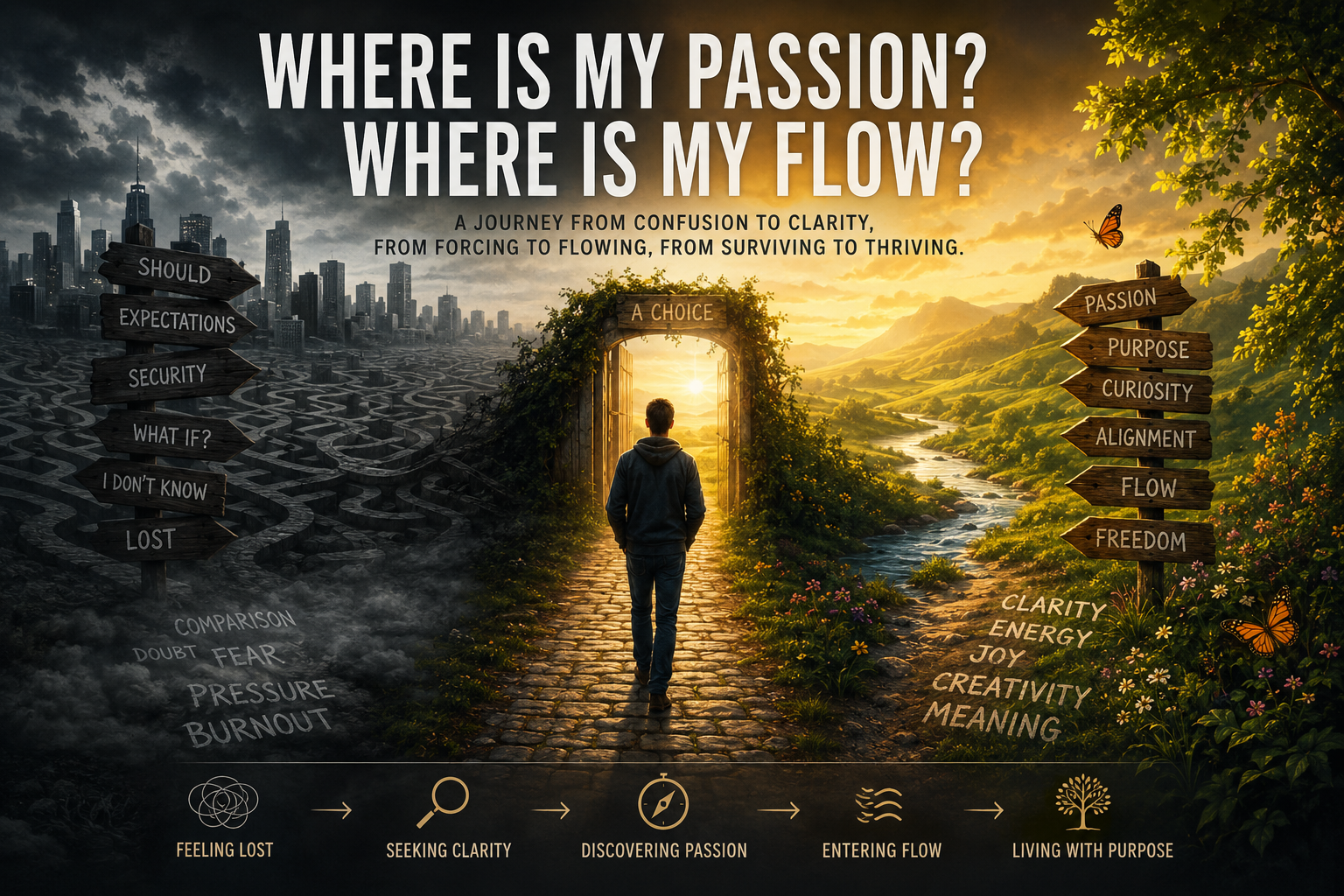
     

  • Why Study Near Death Experiences ?   (What Happens When We Die)

    Why Study Near Death Experiences ? (What Happens When We Die)


    If there’s even a shadow of a chance that this is true,…….   I had better find out.  there is nothing more important.

    John Burke,  Imagine Heaven


    John Burke is a pastor who has studied theology and near death experiences, and he has come to the conclusion that “the core elements of the NDE are a gift from God to color in the picture that was created by Jesus and the prophets.”    I happen to agree.   When it comes to something that we definitely can’t be wrong about,,,  it is eternity.

    Eternity is a big problem for every single one of us.  It makes every other problem we have seem like a tiny, trivial preoccupation.  If there is something we have to get right it’s our understanding and our approach to solving the problem of eternity.

    Where we spend eternity and what we do in eternity.   The good news is that we have a choice.  It is our choice and we are free to pursue eternital life with Jesus in heaven, or we are free to reject it. That within itself, is a very powerful and practical idea.   Ideas have value only when they are cultivated, nurtured and acted upon. That is when they bring energy and power to our lives.

    Overwhelming Fear

    I wrote my latest book, Challenge Your Fear, Empower Your Spirit because of what I have experienced in the Covid pandemic over the past two to three years. I’m not talking about casual fear, I’m talking about sheer terror.  I have seen people isolated and afraid to go outside their homes for a period of months. When I was working in the emergency room at the height of the Covid pandemic, I witnessed doctors washing their hands so rigorously and so often that they were red and chafed by the end of the shift.  I saw patients scream out, “Oh my God !!!  Thank you !!”,  after getting a negative Covid test or quite the opposite, bursting out in tears and sobbing on receiving the news that they were positive for the disease.

    The amount of fear and terror I have witnessed over the past few years was striking. After doing some research and looking into some statistics, it is clear that half the population is dealing with some kind of angst, fear or anxiety.  What is really eye opening is that these statisitics  were derived from studies done before the start of the Covid pandemic.

    “’New survey results show Americans’ anxiety levels experienced a sharp increase in the past year, with almost 40% of respondents saying they felt more anxious than they did a year ago.’

    That’s a pretty big spike–following on the heels of a 36% jump between 2016 and 2017–and it means this year’s national, averaged “anxiety score” has tipped over halfway on a 100-point scale: it’s now sitting at 51, with a five-point increase since 2017.

    ‘This poll shows US adults are increasingly anxious particularly about health, safety, and finances,’ says American Psychiatry Association president Anita Everett, whose organization sponsored the survey.

    That increased stress and anxiety can significantly impact many aspects of people’s lives, including their mental health, and it can affect families.”[1]

    [1] https://sciencealert.com/americans are in the midst of an anxiety epidemic stress increase

    Thankfully, the Covid pandemic has winded down, but our level of fear and anxiety is still very high.

    • 75 percent of Americans experienced moderate to high stress levels in the past month
    • Stress is the number one health concern of high school students
    • 80 percent of people feel stress at work                        

    https://www.therecoveryvillage.com/mental-health/stress/stress-statistics/

    Going through the pandemic as a physician and studying behavior and anxiety levels made me realize that the fear of death is a major driver of habits, values and behavior.  I just didn’t realize it played such a major role in the lives of my patients and my own extended family.

    Many people, myself included, will tell you, “nah,  I’m not afraid of dying” but the reality is that even people with great faith have a fear of death.  Psychiatrist Ervin D Yalom an expert on the psychology of death and dying said,   “despite the staunchest most venerable defenses, we can never completely subdue death anxiety.”  If we are given a diagnosis of terminal cancer or for that matter, Covid, I believe our world view and how we view death has an impact on our behavior and instills fear in any and everyone.  Although those with a material or atheistic worldview, take the position that once we die, that is it, it’s over and there is no hope.

    Our View of Death and Dying

    People who don’t believe in God think that when we die, we just end up going to the place we were before we were born.  In other words, to a place of blackness where we aren’t conscious at all so we won’t be suffering and there is nothing.  It’s over.   Here are some quotes from several atheists describing what they believe happens when we die. Please pardon the rough language,

    I have always felt that when I die, I am dead and gone, my conscious life will end, my interactions with others will end, and I will be simply GONE. I don’t know what causes consciousness (call it spirit, call it soul, I don’t mean to pick sides with my words), but I expect that it will end. My afterlife will be in the memories of those I knew, those who loved me, those who carry me on in their hearts. I, myself, cease to exist.

    This gives me a beautiful, shockingly beautiful sense of the Now. Being in the present, the here and now, is the ultimate reward of life. I am constantly gobsmacked by the minutiae of life; I stand in awe of the things around me right fucking now. There’s no reward, no judgment, no heaven, no hell. I live right fucking now.

    Here’s another,

    I think that when I die I’ll cease to exist, and in some ways I’m happy about that.  Life is hard work.  Life is good, worthy work that I’m proud of and that makes me feel good, for the most part, but even though I’ll probably be sad to die (and I’d hate to think I was about to die any time soon), I’m still glad, in principle, that some day life will cease, and my burdens will dissolve with my joys.  I don’t want to live forever.

    And another,

    I think the fact that you have to ask this question at all says a lot about how the fear of death is inextricably tied to a belief in higher powers in the minds of theists. To one such as I, who shares Kevin’s views, the answer is rather obvious and intuitive. Nothing is going to happen to him when he dies, because there won’t be a ‘him’ for anything to happen to.

    https://www.theatlantic.com/daily-dish/archive/2010/05/what-do-atheists-think-of-death/187003/

    It is interesting that non-believers or agnostics believe that Christians or people from other faiths concocted the ideas behind religion to make themselves “feel better” about dying.There are two problems here.   What if these people quoted above are wrong?

    I remember reading an article outlining a debate between Pastor Rick Warren and best selling author and staunch atheist Sam Harris,  Rick has a closing line that is pretty powerful,

    WARREN: You’re more spiritual than you think. You just don’t want a boss. You don’t want a God who tells you what to do.

    HARRIS: I don’t want to pretend to be certain about anything I’m not certain about.

    Rick, last thoughts?
    WARREN:
     I believe in both faith and reason. The more we learn about God, the more we understand how magnificent this universe is. There is no contradiction to it. When I look at history, I would disagree with Sam: Christianity has done far more good than bad. Altruism comes out of knowing there is more than this life, that there is a sovereign God, that I am not God. We’re both betting. He’s betting his life that he’s right. I’m betting my life that Jesus was not a liar. When we die, if he’s right, I’ve lost nothing. If I’m right, he’s lost everything. I’m not willing to make that gamble.

    https://www.newsweek.com/newsweek-poll-90-believe-god-97611

    That is the gist of it. What are we betting our lives on at this moment? What if we bet wrong ?

    Everyone loves being right.  If I die and go to a big black nothing,  there will be no one there to say, “see,  I told you.”    But if Sam Harris and other atheists are wrong, they will have to stand before Jesus and give an account of their lives.  That is why I love studying NDEs.  They give you the answers to the test, before you take the test.   Remember one of the most common questions NDErs say are asked of them,  “what do you have to show me that you have done with your life? ”

    The second problem is that it doesn’t matter what you believe or purport to believe,  EVERYONE has death anxiety.  Christians, Atheists, Muslims, Jews, Hindus, we all have death anxiety.

    There is one group of people who don’t have death anxiety.  One.   The people who have undergone an NDE. Simply put, they aren’t afraid of dying, because of their experience.

    https://journals.sagepub.com/doi/10.1177/002216781989210 

    The one thing that I do want to mention is that we really aren’t “betting” if we choose to believe Jesus.  There is plenty of evidence to support the existence of Jesus and the historicity of the resurrection.  It isn’t a fable or a myth.

    Also, if the bible was a myth or a fable, why do we keep finding archaelogical evidence that confirm  events described in the Old and New Testament ?


    The Value Of Near Death Experiences

    So this comes back to the basic question.  Why study the Near Death Experience ? Well, I think there are two major reasons that I have outlined in my books.

    Near Death Experiences have all the components of a topic that gets our attention and has an impact. Whenever we come across some news item or a new idea or something that we see on a post on Instagram or Facebook, the posts that get our attention have one of three things in common. Here is an excerpt from my latest book, Challenge Your Fear, Empower Your Spirit,

    We know that there are many distractions in the world today with social media, four hundred channels of television, and now Netflix and streaming video. We also know that there are three ways to get someone’s attention:

    1. Something unique
    2. Something valuable
    3. A threat

    Something new or unique will grab your attention. We’re also more likely to pay attention to an idea if we perceive it to have value for ourselves or our families. The last quality or attribute of an idea that can arouse our curiosity is when something is a threat or could be seen as dangerous. Our self-preservation instincts kick in and tell us to pay attention because there could be danger ahead.

    If we stop to think about Near Death Experiences, they are unique, valuable and if we are paying attention, they are serving as a warning.

     I believe that Near Death Experiences are powerful sources of unique spiritual guidance, insight and enlightenment that we can’t find anywhere else other than the bible.

    But the bible itself is our authority while living out our lives on this planet.   Pastor Voddie Baucham sums up why we should use the bible as our authority in a beautiful way,

    “I choose to believe the bible because it is a reliable collection of historical documents, written down by eyewitnesses during the lifetime of other eyewitnesses that report to us supernatural events that took place in fulfillment of specific prophesies and claim that their writings are divine rather than human in origin.”

    For me personally, another reason I choose to believe the bible is that Jesus quoted it often and he essentially spoke the New Testament into existence. From my own experience there is truth and supernatural power in the words of Jesus.

    The Power of a Life Review

    I want to share one near death experience that I used in my first book, Brave the Wave. The details regarding this one vignette was like a rock in my shoe and in my spirit because it really opened my eyes when it came to my interactions with my family and with other people at work or at church. It also served to reinforce the principles of loving and serving others espoused by Christ.

    One of the most interesting accounts of an NDE was given by a person named Tom in Dr. Kenneth Ring’s book Lessons from the Light. 

    As a youth, Tom had an uncontrollable temper, and one day, as he explained to us, it really got him into trouble. He had been driving his hotrod pickup truck through town when a pedestrian darted out and almost collided with Tom. Tom, rather than being relieved that no accident had occurred, found himself incensed that this man had almost damaged his beautiful truck, of which he was inordinately proud. Angry words were exchanged, soon followed by blows, and Tom eventually pummeled his victim into unconsciousness and left him lying in the middle of the street.[i]

    Here’s where it gets interesting, as Tom has a “life review” during his NDE:

    Years later, during his NDE, Tom was forced [notice here he didn’t have much of a choice] to relive the scene, and like others we have talked about, he found himself doing so from a dual perspective. One part of himself, he said, seemed to be high up in a building overlooking the street, from which perch he simply witnessed, like an elevated spectator, the fight taking place below. But another part of Tom was actually involved in the fight again. However, this time, in the life review, he found himself in the place of the other party and experienced each distinct blow he had inflicted on this man—thirty-two in all, he said—before collapsing unconscious on the pavement.

    This is the part that had an impact on me, reported in Tom’s words:

    I also experienced seeing my own fist coming directly into my face. And I felt the indignation, the rage, the embarrassment, the frustration, the physical pain. I felt my teeth going through my lower lip—in other words, I was in that man’s eyes. I was in that man’s body. I experienced everything of that interrelationship between Tom and that man that day. I experienced unbelievable things about that man that are of a very personal, confidential, and private nature.

    This is a graphic example, but there are numerous accounts of reliving situations where the NDEr could feel the pain they caused others, or—thankfully—the love they freely gave to others.

    This may be a good time to reflect on times we inflicted pain on others, or when we freely gave love to others. It makes me stop and think a little more when I get into an argument with those closest to me or say sarcastic or mean things to those I love the most.

    NDEs teach us very important lessons. Every interaction matters. Every smile we show to others matters. Every smirk or snide remark we give to someone matters. Every kind word or kind deed done out of a loving heart matters. When we understand these truths, it has an impact on our interactions. Do we all become saints suddenly? Do we become Mother Theresa overnight? No. In Evidence of the Afterlife, Dr. Long tells us of studies showing that “it takes as long as seven years or more for a person who has a near-death experience to fully integrate into their life the changes that resulted from the experience.”[ii] If the people who almost died take seven years to fully change, don’t expect major changes in your life in a few days. It takes time, discipline, and effort.

    [i] Ring, Lessons from the Light, 157.

    [ii] Long, Evidence from the Afterlife, 177.

    NDEs Support Biblical Truth

    Reading and going over this NDE and studying some of the other experiences give more power and impact to the words of Jesus,

    So in everything, do to others what you would have them do to you, for this sums up the Law and the Prophets.

    Matthew 7:12 NLT

    Our interactions with others and what we do with our talents and gifts when it comes to our purpose is what we will be asked about when we stand before Jesus.

    To me, the analogy is similar to walking into a university classroom and you didn’t know there was a test coming.  You have no idea what the material is about. It is almost like a foreign language when you look at the test.  From my own experience going through college and medical school, that was one of my biggest fears, not being prepared for the test.

    How do we prepare ?   How do we acquire wisdom, knowledge and enlightenment ?  Well we start with the bible. The bible is our authority for how to live out our lives here on earth because it is God’s Word.

    Jesus said,

    “I am the true vine, and my Father is the vinedresser. Every branch in me that does not bear fruit he takes away, and every branch that does bear fruit he prunes, that it may bear more fruit. Already you are clean because of the word that I have spoken to you. Abide in me, and I in you. As the branch cannot bear fruit by itself, unless it abides in the vine, neither can you, unless you abide in me. I am the vine; you are the branches. Whoever abides in me and I in him, he it is that bears much fruit, for apart from me you can do nothing. If anyone does not abide in me, he is thrown away like a branch and withers; and the branches are gathered, thrown into the fire, and burned. If you abide in me, and my words abide in you, ask whatever you wish, and it will be done for you. When you produce much fruit, you are my true disciples. This brings great glory to my Father.

                                                                                                                                                                                                                                           (John 15:1-8 NLT)

    Jesus also said,

    The Spirit gives life; the flesh counts for nothing. The words I have spoken to you—they are full of the Spirit and life.

    John 6:63  NLT

    When we study the bible and the words of Jesus, we are engaging in spiritual habits and strengthening and enlightening our spirits.  These activities give us strength, power and help us to move from fear and anxiety to boldness, competence and confidence.

    When we study Near Death Experiences, we are reminded of what is truly valuable in this life and how we should interact with our families and those who we love most.

    NDEs serve as an adjunct for spiritual guidance and help us to focus on what is important.   Notice that when people undergo an NDE, the experience is sort of a course correction. It is kind of a spiritual reassignment that is supernatural in origin and power.  NDEs tell us that we all have an assignment of love and an assignment of energy.

    Kenneth Ring has argued that you don’t need to die to get the benefit of the NDE, and I agree whole heartedly.    Studying the bible first, and then studying unique and powerful NDE testimonies have done a great deal to change the course of my own life in a way that is much more beneficial and fruitful for myself and for my family.  I truly believe if you start to look into these unique and powerful experiences, it will change your life too.

    The books that had the most impact on me are these,

    I do want to mention one thing about Howard Storm’s book, My Descent Into Death. He describes a hellish experience that is quite captivating but at the same time very disturbing. He describes some of the things that happened to him during his descent into hell and how he was attacked by evil beings.  It is a very powerful account.

    Howard is still in therapy regarding his hellish experience.  He quit his job as a university professor to become a pastor. This is an example of the power of NDEs.  They change lives.

    Here is another post outlining the value of NDEs in giving us guidance for purpose and meaning in our lives.

    Why Study Near Death Experiences? They Shine Light on Purpose and Meaning


    Some skeptics dismiss near death experiences as mere dreams or the product of a brain deprived of oxygen.  Have you ever heard of anyone going to psychological therapy for over a decade because of a dream? Me neither.  Spend time in the Word and do some research into Near Death Experiences and the wisdom and guidance they offer. You won’t regret it.

    I do need your help though, if you are a fellow Christian believer and would like to help spread this message, please take the time to leave a review on one of my books.   This is the only written review I have for my Challenge Your Fear book that has been on sale for 1 year.

    1 out of 5 stars,    If you are not a devout Christian this book is complete crap.  

    Reviewed in the United States 🇺🇸 on November 12, 2022


    It is clear from the moment of the introduction that Challenge Your Fear Empower Your Spirit was written by a Christian for Christians, and there is plenty of helpful tips that do not involve faith.

    One thing I have learned is that this is a huge war we are in as Christians.  We are going to face ridicule, rejection and criticism, just like Jesus did. But we need to stick together and help each other.

    What blessings await you when people hate you and exclude you and mock you and curse you as evil because you follow the Son of Man. When that happens, be happy! Yes, leap for joy! For a great reward awaits you in heaven.

    (Luke 6:22- 23 NLT)

    I’m not asking for money, I just ask that if you buy one of my books, please take 30 seconds of your time to leave a written review that can help to counter some of the anger and hatred that comes when anyone mentions Jesus.

    Any help you can offer will be greatly appreciated !!


  • We All Have A Choice

    We All Have A Choice

                                   “So Much Wasted Time”

    Look at the picture above.   Both of these women are 80 years old.   It is a striking photo when it comes to contrasts. We will come back to this in a second.

    The title is what I want to make this post about because these are the last words of  singer and actor David Cassidy. Last words give us a pretty good idea of what people are thinking about and what they value.  The end of life is a fascinating time to explore as hospice nurses can tell us.  We can learn a great deal about regret when we are close to death or when we are young, healthy and full of energy. This is a choice.

    We can also choose to learn about the Authentic self and the process of transitioning from our false self into what we were truly created to be.  This is a process that is inevitable for everyone, whether we realize it or not. At the end of our lives, the only self that keeps going is our True Self. Finding and releasing our Authentic Self while we are still alive and full of energy has many, many benefits, as I’ve written about in my books.

    What I’ve tried to accomplish in writing the Authentic Self series is a kind of road map or guide book to help us get closer to who we were created to be before the end of our lives. The whole idea is to avoid uttering the words,  “so much wasted time” at the end of our lives.

    When we get closer to our Authentic Self, we are engaging in our passion while pursuing our purpose. We are bold, competent and have healthy and spiritually driven goals. Our Authentic self is passionate, enlightened and bold. It is infused with power and energy.

       Avoiding Regret

    In my first book of the Authentic Self series,  Brave the Wave, I listed the regrets of hospice patients at the end of life. Here is an excerpt from the book,

    Maybe we should be thinking about death a little more, so we can value the time we have today. When people are close to dying, and they can see the finish line, they start to see the things that are most important. Family, relationships, other people. They also start to think about the things they wish they’d done.

    In his book Resisting Happiness, Matthew Kelly[i] made a list of regrets he compiled from interviews with hospice nurses. Here’s a list of some of the most common regrets expressed by people who were dying:

    I wish I’d had the courage to just be myself.

    I wish I’d spent more time with the people I love.

    I wish I’d made spirituality more of a priority.

    I wish I hadn’t spent so much time working.

    I wish I’d discovered my purpose earlier.

    I wish I’d learned to express my feelings more.

    I wish I hadn’t spent so much time worrying about things that never happened.    (this is the essence of fear and anxiety)

    I wish I’d taken more risks.     (also related to fear and anxiety)

    I wish I’d cared less about what other people thought.    (another obstacle caused by fear)

    I wish I’d realized earlier that happiness is a choice.

    I wish I’d loved more.

    I wish I’d been a better spouse.

    I wish I’d taken better care of myself.

    I wish I’d paid less attention to what other people expect.

    I wish I’d quit my job and found something else I really enjoyed doing.

    I wish I would have stayed in touch with old friends.

    I wish I’d touched more lives.

    I wish I hadn’t spent so much time chasing the wrong things.

    I wish I’d had more children.

    I wish I’d traveled more.

    I wish I’d thought about life’s big questions earlier.

    I wish I’d lived more in the moment.

    I wish I’d pursued more of my dreams.

    I wish I’d spoken my mind more.

    You want real value? There it is. It’s like the answers to a test before you take the test.

    There’s real clarity and wisdom when you get close to the end. When you know your time is very limited, you tend to realize what has real value and what doesn’t.

    There are some real insights into our lives when we read this list. If we look at it carefully, we can see common themes that can help us right now in our own journey. Why wait until we’re dying to look at these regrets? We can start to look at what people really value and then examine our own lives.

    Five or six of these regrets deal with the relationships we have while we’re alive. As we’ve discussed in our examples of near-death experiences, relationships with other people are the main scenes that are shown to us. We rarely hear about someone reviewing an episode in their lives when they’re alone. Rather, the focus of these experiences is love. We can see from this list of regrets that people are wishing they’d focused more on their relationships with a spouse, significant other, child, or old friends.

    Relationships are what’s important in this life. Family and friends. Spouses and children. The family is the laboratory and classroom where we learn how to love. Learning to love starts in the family, then branches to friends from school and then friends at work or at church. Those are the things that have real value.

    [i] Matthew Kelly, Resisting Happiness, second ed. (New York: Beacon, 2016).

    If we go over some of these regrets, clearly, not spending time on relationships and love are some of the most common regrets that people have. This is a good list to keep on your desktop or as a screen saver to remind us of what is important in this life.

    The interesting thing about this when it comes to end of life awakening and a realization of what is important is that we can see way more clearly when we are close to the end.  We begin to realize what’s most important. That’s why I like studying near-death experiences.  Besides being fascinating to me personally, I believe they give us spiritual insights that we can’t find anywhere else. They give us a glimpse into the spiritual world that if we are being honest with ourselves, we can’t find in our current pursuits, many of which are a waste of time.  David Cassidy profoundly told us this in his last words.

    When we look at near-death experiences and the wisdom and spiritual insights they provide, we can see that one of the main reasons for these experiences is wisdom and education. Teaching. Enlightenment.

    The Authentic Self

    Dr Kenneth Ring describes this learning process in his book “Lessons from the Light”

    I have talked about this authentic or true self as something that is the Light’s function to disclose to the individual. How does it do that? The answer is, often by first showing the NDEr his or her false or socially conditioned self.… In other instances, however, the NDEr is given a direct perception into the nature of the false self and is thereby allowed intuitively to understand that the person one has identified with and habitually thought of as one’s essential self was nothing more than fiction.[i]

    [i] Ring, Lessons from the Light, 54.

    Fr Richard Rohr describes the false self in his best selling book “The Immortal Diamond”

    Your soul—your True Self, your deepest identity, your unique blueprint—is who you are in God and who God is in you. You’re false self dies when you die. Only you’re true self lives forever. 

    The whole point of moving closer to authenticity is to begin to understand what has value in this life. On this road we discover passion, purpose, meaning and identity.  These are all so very crucial to help us survive in a world full of suffering. It also points out the pervasive devaluing of truth.  We can empower our growth by remembering that Jesus is truth.  That is what he called himself.

    “I am the way and the Truth and the life, No one comes to the Father except through me.”

    (John 14:6 NLT)

    Part of this journey and this growth involves accepting personal responsibility.  It’s on you and it’s on me.

    If not us, Who?   If not now, When ?

    Taking personal responsibility allows us to overcome our fear, uncover our passion and pursue purpose.   There are a lot of lies being spread right now around the world, some of which I wasn’t even aware until recently.  False doctrine and blatant lies are being propagated everywhere we look. Its very obvious.  We should remember that Satan’s title is “The Father of Lies”.

    If we go back and look closely at the photo at the top of this post, it clearly shows a striking difference in appearance of the two women both of which are 80.  The problem is that we don’t know if the woman on the right has debilitating rheumatoid arthritis so she isn’t able to exercise or she may have a chronic medical problem. But if we assume that both are healthy 80 year old females, clearly the choices that we make have an impact on our appearance and our health.

    But what about spiritual growth and the Authentic Self? We have no idea how strong spiritually either of these women are. The woman with a walker could be a spiritually mature, closer to authenticity, believer and the one on the left may still be an 80 year old spiritual infant.  I have met a few of those.

    As I mentioned in Discover Your Passion, we can grow spiritually stronger all the way into our nineties, even if our bodies are failing us, (that would be me) at the current moment.

    Keep growing and keep moving.  Just a reminder,  Challenge Your Fear, Empower Your Spirit,  is now available on Amazon for .99 cents. I believe its my best book yet.

    Discover Your Passion,

    Challenge Your Fear,

    Pursue Your Purpose

    Find Meaning

    Take responsibility for moving toward Authenticity

    You will never regret it

    Your Brother in Christ

    Johnny Cavazos MD

    Authentic Self Series (3 book series) Kindle Edition (amazon.com)